

What Is an Agate Ball? A Dense Milling Medium for Ultrafine Powder Grinding
What Is an Agate Ball?
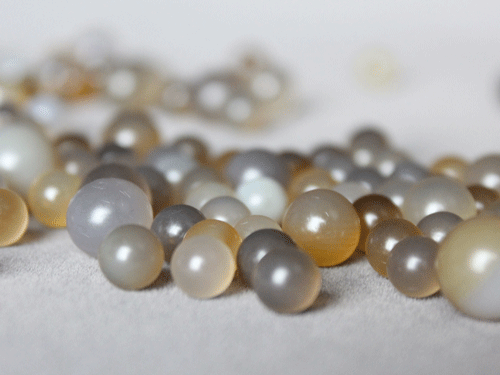
From the core, an agate ball is a dense, high-purity grinding medium made from agate and used in laboratory and small-scale milling equipment to reduce solid materials to fine or ultrafine powders. It is not a machine in its own right. Instead, it is a consumable that works inside a mill jar, where repeated impacts and friction break down the sample. Its main purpose is to deliver grinding energy while keeping the risk of metallic contamination low, which is why it is often chosen for analytical, ceramic, pigment, and research applications where the composition of the final powder matters.
In practice, an agate ball is one part of a three-part system: the mill, the jar, and the grinding media. The mill supplies motion, the jar contains the sample, and the balls transfer energy to the powder. A well-matched agate ball charge can improve grind uniformity, reduce sample loss, and make cleaning easier. A poorly matched charge can slow the process, increase wear, or introduce unwanted particles from chipped media. Understanding the material, the working action, and the selection criteria is therefore more useful than treating the ball as a simple accessory.
How an Agate Ball Works in Powder Milling
From Coarse Feed to Fine Powder
Inside a planetary ball mill or jar mill, the jar rotates and the ball charge moves with it. As the jar turns, the agate balls are lifted, rolled, and dropped against the sample and the jar wall. Each collision applies mechanical stress to the particles. Over many cycles, large particles are fractured into smaller fragments, and the powder becomes finer and more uniform. The process is gradual: the final particle size is the result of many individual breakage events rather than a single crushing step.
The same principle applies when the mill is used for mixing or homogenizing rather than pure size reduction. The balls create shear and turnover within the powder bed, which can blend components and break up soft agglomerates. In this mode, the ball charge should be selected to promote circulation without excessive wear. The goal is not simply to add more balls or run longer; it is to create a repeatable motion pattern that matches the sample and the target powder.
Impact, Friction, and Rolling Action
Three actions dominate inside the jar: impact, friction, and rolling. Impact occurs when a ball strikes the sample or another ball with enough energy to fracture particles. Friction occurs as balls slide and rub against the powder and the jar surface, wearing down particle edges and helping to reduce agglomerates. Rolling occurs when balls rotate against each other and the jar wall, producing a gentler action that can be useful for mixing and for materials that are sensitive to high-energy shocks. The balance among these actions changes with mill speed, jar geometry, ball size, and fill level.
At lower speeds, rolling and friction are often more prominent, which can favor gentle comminution and blending. At higher speeds, the balls are thrown farther and impact becomes stronger, increasing grinding intensity but also raising wear and heat generation. Agate balls are dense enough to carry useful kinetic energy, yet they are not the hardest or toughest media available. That trade-off is central to their use: they are valued for purity and low metallic contamination, while users must avoid conditions that cause chipping or excessive abrasion.
Process Parameters That Shape the Result
The final powder is influenced by several interacting parameters. A practical evaluation usually considers the following:
- Mill speed and energy input: higher energy generally accelerates size reduction but can increase wear and heat.
- Ball-to-powder ratio: more media per unit of sample raises collision frequency but reduces the space available for powder.
- Ball size distribution: larger balls provide stronger impacts, while smaller balls create more contact points for fine grinding.
- Jar material and fill level: the jar must be compatible with the media, and overfilling can restrict motion.
- Milling time and atmosphere: longer runs may improve fineness up to a point, but can also cause agglomeration or contamination.
- Sample properties: hardness, brittleness, moisture, and initial particle size all affect the rate of breakage.
Because these factors interact, there is no single setting that suits every powder. A useful starting point is to define the target particle size, the acceptable contamination level, and the required batch size. From there, the user can adjust media size, charge ratio, and run time in small trials before committing to a production or laboratory routine.
Core Features and Construction of an Agate Ball
Material Purity and Contamination Control
Agate is a dense natural mineral material, and agate balls are produced by shaping, finishing, and inspecting the material into spherical media. The main reason users select agate rather than steel or other metallic media is contamination control. In X-ray diffraction, X-ray fluorescence, spectral analysis, and other sensitive analytical workflows, even small amounts of metal wear can affect results. Agate media reduce the risk of metallic contamination, although they are not absolutely inert. As with any grinding medium, wear can add a small amount of material to the sample, so the user should consider the acceptable contamination level for the application.
Purity is not only a property of the raw material. It also depends on careful manufacturing, clean processing, and lot control. A supplier should be able to describe the material grade and the inspection approach. For research groups and quality control laboratories, consistency between lots can be as important as the initial specification, because a change in media behavior can shift grinding times and particle size results.
Shape, Size, and Surface Quality
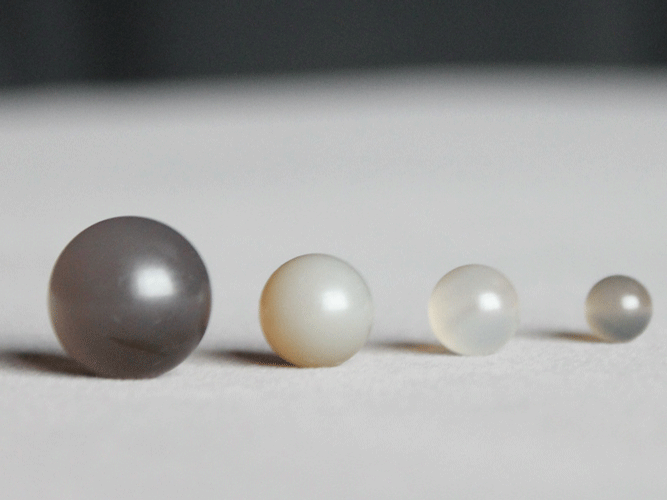
A well-formed agate ball should be close to spherical, with a smooth surface and no visible cracks, chips, or deep pits. Sphericity matters because it makes rolling and collision behavior more predictable. Surface quality matters because rough areas can trap sample, generate extra friction, and become starting points for wear. Chipped media are especially undesirable in sensitive work, since a broken fragment can contaminate the batch and change the motion of the remaining charge.
Ball size affects both impact energy and the number of contact points. Larger balls are generally better for breaking coarse or hard particles, while smaller balls provide more contacts and can improve fine grinding and blending. In many jars, a mixed charge is used to combine impact and attrition. The best distribution depends on the jar diameter, the sample load, and the target fineness. A charge that is too coarse may leave fine grinding incomplete; a charge that is too fine may lack the energy to break larger particles.
Compatibility With Mill Jars
Agate balls are often used with agate mill jars to maintain a consistent material system and reduce cross-contamination. They can also be used in other compatible jars when the application allows it, but the user should check the hardness and condition of the jar. A hard media charge in a softer jar can wear the jar surface; a mismatched combination can also produce unwanted debris. Jar volume, wall thickness, and sealing method all influence how the ball charge moves, so compatibility should be confirmed before a new combination is placed into routine use.
Types and Classification of Agate Balls
An agate ball is a grinding medium rather than a machine, so its types are best understood by size, finish, and application fit rather than by equipment model. Buyers usually compare media within a practical family of options and then select the combination that matches the jar, sample, and target powder.
By Size Range
Suppliers may offer agate balls in different diameter ranges. Small balls are used for fine grinding, homogenization, and work with limited sample volume. Medium balls are a general-purpose choice for many laboratory jars. Larger balls are selected when more impact energy is needed to break coarser feed. Rather than assuming that one size is best, users should consider the initial particle size, the jar diameter, and the fineness target. A graded charge can be useful when both coarse breakage and fine grinding are required.
By Surface Finish and Grade
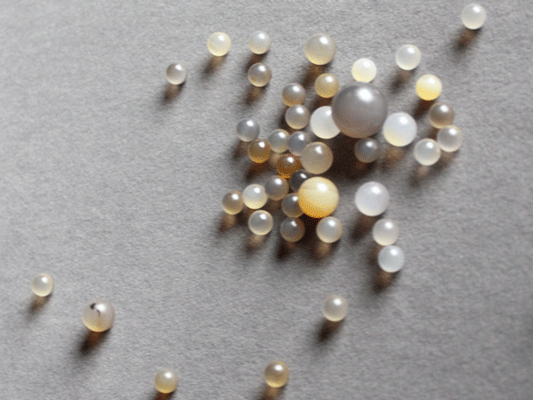
Agate balls can differ in surface finish and visual grade. A polished, uniform surface is easier to clean and is often preferred for sensitive analysis. A standard finish may be adequate for less demanding mixing or for preliminary size reduction. The important checks are freedom from cracks, chips, and inclusions, and consistency of shape. For quality control, a simple incoming inspection under good lighting can reveal defects that might otherwise cause premature failure.
By Application Fit
Application fit is more important than a generic label. Analytical laboratories often prioritize cleanliness, low contamination, and repeatable grinding. Ceramic, glass, and pigment work may emphasize wear resistance and cost per batch. Teaching laboratories may need a durable general-purpose medium that is easy to handle and clean. In each case, the selection should be based on the material being processed, the acceptable contamination level, and the actual mill setup rather than on a single headline property.
Key Performance Indicators and Selection Points
When comparing agate balls, users should look beyond the initial appearance and consider how the media will behave over many runs. The most useful indicators are grinding performance, wear behavior, compatibility, and handling convenience.
Grinding Performance and Repeatability
Good performance means that the medium helps reach the target fineness within a practical time and produces a consistent result from batch to batch. Repeatability depends on stable ball size, shape, and surface condition, as well as on the mill program. If a laboratory changes media lots and suddenly needs a longer run time, the difference may come from size distribution or surface condition. Keeping records of media lot, charge weight, and grinding results makes it easier to identify such changes.
Wear, Service Life, and Contamination Risk
All grinding media wear over time. For agate balls, the key concern is not only how long the media last but how they fail. Gradual surface dulling is different from chipping or cracking. Chipped media should be removed because they can contaminate the sample and disturb the ball charge. Users should inspect media regularly, especially after processing hard or abrasive materials, and replace damaged pieces rather than continuing to run them.
Mill Compatibility, Loading, and Handling
The ball charge must fit the jar and the mill program. Overloading a jar can reduce motion and increase stress on the jar and lid. Underloading can waste capacity and produce inefficient grinding. The user should follow the mill manufacturer's guidance for jar filling and check that the media and jar materials are compatible. Handling also matters: agate balls should be stored cleanly and protected from drops or hard impacts that can cause invisible cracks.
Maintenance and Cleanability
Easy cleaning supports reliable analysis and reduces cross-contamination. Agate balls can generally be cleaned with appropriate laboratory methods, but harsh abrasive cleaning should be avoided because it can scratch the surface. After washing, media should be dried fully before storage or reuse. A clean, dry storage container helps prevent dust and sample residue from accumulating. When switching between samples, a documented cleaning routine is more reliable than a quick rinse.
How to Run a Practical Trial With Agate Balls
Because media performance is system-dependent, a small trial is usually more informative than a specification sheet alone. The trial should use the actual sample, jar, and mill program that will be used in routine work. Before starting, define the target: a particle size range, a mixing result, or a contamination limit. Then choose a conservative ball charge and run a short cycle. The aim is to learn how the sample responds, not to force the mill to its maximum output on the first attempt.
Record the variables that can affect the outcome, including the media lot, ball size or size mix, charge weight, sample weight, jar type, mill speed, run time, and number of cycles. After the run, inspect the powder for visible chips or unusual color, and compare the result with the target. If the powder is still coarse, increase energy gradually rather than making several changes at once. If the powder is overground, sticky, or contaminated, reduce energy or review the media and jar combination.
What to Record During a Trial
- Media size, grade, and lot identification.
- Ball charge weight and the number of balls, where practical.
- Sample weight, initial condition, and moisture level.
- Jar type, fill level, mill speed, and run time.
- Final appearance, fineness, yield, and any visible wear.
When to Adjust the Ball Charge
If grinding is slow, the charge may be too small, the balls may be too small for the feed, or the mill speed may be too low. If the sample is heating up or the media show rapid wear, the energy input may be too high or the charge may be too aggressive. A change in ball size distribution is often more effective than simply adding more balls, because it changes the balance between impact and surface contact. Make one change at a time so the effect can be understood.
When to Stop Using a Batch
Retire a batch when balls show chips, cracks, deep scratches, or flat spots, or when results become inconsistent despite a controlled program. Visible damage is a clear sign, but subtle wear can also matter in sensitive analysis. Keeping a small reference set of unused media can help users judge color, surface condition, and shape over time.
Applications and Selection Advice
Agate balls are used in laboratories and small-scale processing where fine grinding, mixing, or homogenization is needed and metallic contamination is a concern. Typical settings include geological and mineral samples, ceramics and glass, pigments and coatings, pharmaceutical and food research, and general analytical sample preparation. They are also used in teaching and method development, where small batches and flexible conditions are important.
For analytical work, the priority is usually a clean, consistent medium that will not alter the elemental or structural information being measured. For materials research, the balance shifts toward grinding energy, wear life, and cost per useful batch. For quality control, repeatability and documentation may be the deciding factors. Users should avoid selecting media only by price or by a single size recommendation. A short trial with the actual sample and jar is often the fastest way to confirm whether a candidate charge meets the target.
For Analytical Laboratories
Choose agate balls that are visually sound, uniform, and easy to clean. Confirm that the jar material is compatible and that the cleaning procedure will not leave residue. If the sample is valuable or difficult to replace, run a small trial and inspect the powder for stray particles before adopting the method for routine work.
For Materials Research and Small-Scale Production
Consider the hardness and abrasiveness of the sample. Very hard or abrasive feeds can increase media wear, so the user should monitor surface condition and replace damaged balls promptly. A mixed-size charge may improve efficiency, but it should be tested rather than assumed. When contamination limits are strict, the entire jar and media system should be reviewed together.
For Purchasing and Quality Control
Ask for clear product information, inspect incoming media, and keep lot records. The agate ball product page is a practical starting point for confirming the available product and its images before a trial. A supplier who can answer questions about material grade, dimensions, and inspection helps reduce the risk of a poor match.
Common Questions About Agate Balls
Are agate balls suitable for every sample?
No. They are a good fit for many soft to medium-hard materials and for applications where metallic contamination must be minimized. Very hard or highly abrasive samples can accelerate wear, so users should test the material and inspect the media afterward. If a sample attacks the media quickly, a different medium may be more practical.
Do agate balls require a special mill jar?
They do not always require a special jar, but the jar and media should be compatible. Matching agate balls with an agate jar is common in sensitive work because it keeps the material system consistent. Other jars may be acceptable when the application allows and the jar is in good condition.
How can users tell when an agate ball should be replaced?
Look for chips, cracks, deep scratches, flat spots, or a sudden change in grinding behavior. Damaged media should be removed from service. Even without visible damage, media that no longer clean up well or that produce inconsistent results may need replacement.
Can agate balls be cleaned and reused?
Yes, they are intended to be reused with proper care. Use a suitable cleaning method for the sample and avoid abrasive tools that can scratch the surface. Dry the media completely before storage, and keep them protected from impact.
Practical Takeaway
An agate ball is a small but important part of a milling system. Its value comes from combining dense grinding action with a low risk of metallic contamination. The best results come from matching the ball size, charge, jar, and mill program to the sample, then monitoring wear and repeatability over time. For users who need a clean grinding medium for ultrafine powder work, the agate ball is a focused solution rather than a universal one. A careful trial and a clear inspection routine will reveal more than a headline specification alone.
Related Products
Get In Touch
Our professional team will reply to you within one business day. Please feel free to contact us!