

What is Agate Ball? A High-Purity Grinding Media for Contamination-Free Fine Milling in Laboratories
What is an Agate Ball? A High-Purity Grinding Media for Contamination-Free Fine Milling
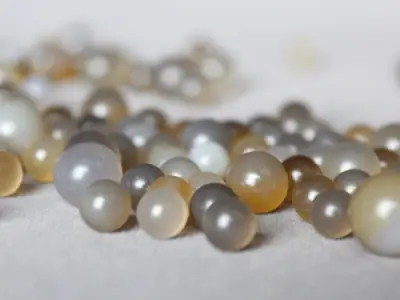
At its core, an agate ball is a natural silica-based grinding media primarily used in planetary ball mills, drum ball mills, and other fine milling equipment to efficiently reduce material particle size down to sub-micron levels. Unlike metallic grinding balls, agate balls are prized for their exceptional hardness (Mohs 6.5–7), high chemical stability, and low wear rate, which together ensure minimal cross-contamination of the sample during grinding. This makes them the preferred choice in laboratories handling high-purity materials such as precious samples, spectroscopic standards, and ceramic powders.
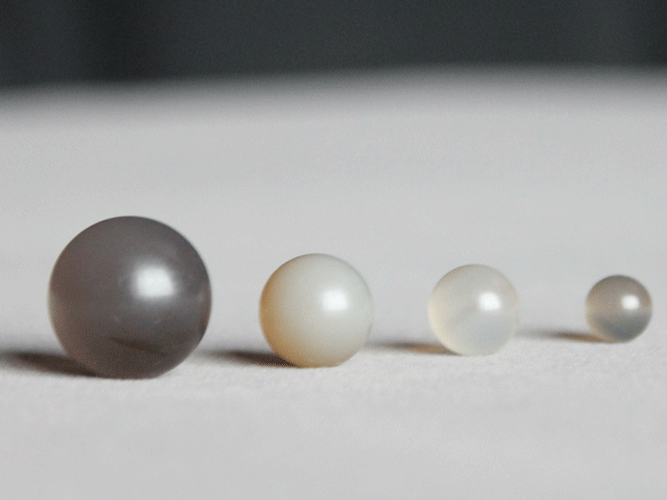
Core Function and Working Principle
Agate balls serve as the primary medium that transfers mechanical energy to the material being ground. Inside a ball mill, the agate balls, along with the sample, are subjected to centrifugal forces arising from the mill's rotation. In a planetary ball mill, for example, the balls experience both revolution around the main disk and high-speed rotation around their own axis, generating strong impact, shear, and friction forces. These forces repeatedly compress and shear the particles against the agate ball surfaces and the mill jar interior, gradually reducing their size.
The key advantage of agate balls lies in their material properties: they are made from natural chalcedony (a form of quartz), which contains minimal metallic impurities. During grinding, the balls wear at a very low rate, and the tiny amount of wear debris consists of the same high-purity silica, thus avoiding the introduction of foreign elements like iron, chromium, or nickel that could interfere with downstream analysis or compromise product quality.
Key Parameters Affecting Grinding Performance
- Ball diameter: Typically ranging from 1 mm to 30 mm, smaller balls are used for fine grinding, while larger ones provide higher impact energy for coarse crushing.
- Ball-to-powder weight ratio: Commonly 10:1 to 20:1, optimizing the balance between grinding efficiency and wear.
- Mill rotation speed: Must be adjusted to achieve the desired centrifugal force without overloading the mill jar.
Core Characteristics and Advantages
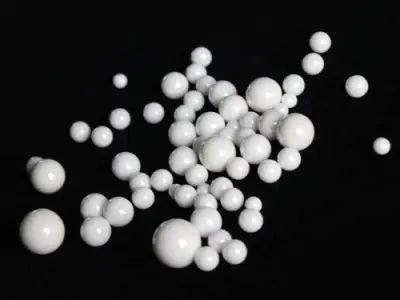
As a specific type of grinding media, agate balls offer distinct benefits over alternatives such as 304 stainless steel grinding balls or zirconia grinding balls:
- Chemical inertness: Resistant to most acids and alkalis at room temperature, making them suitable for grinding corrosive materials.
- Low surface roughness: The naturally smooth surface of agate reduces particle agglomeration and facilitates easy cleaning between batches.
- Wear resistance: While not as hard as tungsten carbide, agate wears slowly and does not introduce any metallic contamination.
- Versatility: Effective for both dry and wet grinding, and works well with materials ranging from hard minerals to brittle chemical compounds.
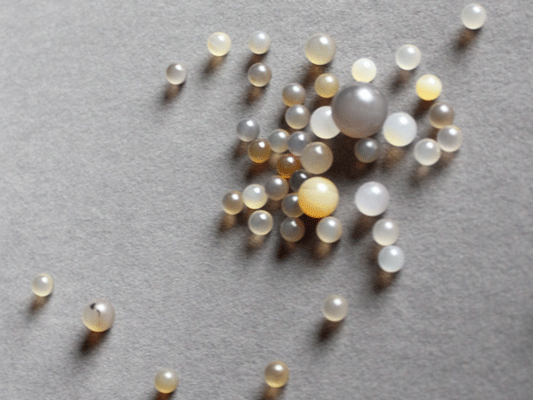
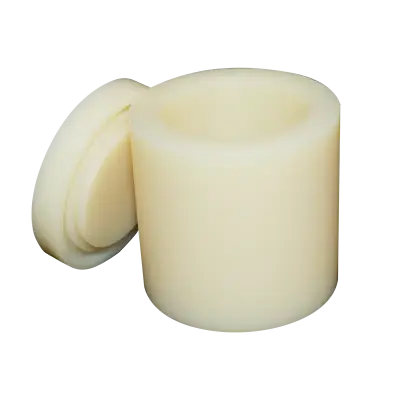
Agate balls are available in various sizes and can be used in agate planetary mill jars or any compatible jar made of similar or harder materials to avoid cross-contamination.
Key Performance Indicators and Selection Criteria
When selecting agate balls for a mill application, the following metrics should be evaluated:
- Particle size reduction capability: Agate balls can achieve final particle sizes down to ~1 µm for most hard materials and sub-micron for softer ones.
- Contamination level: Typically less than 0.1% wear loss per cycle, with the wear debris being pure SiO₂, which is acceptable for most non-metallic applications.
- Energy efficiency: Agate balls have lower density (2.65 g/cm³) than steel or zirconia, which reduces the kinetic energy per ball, but their wear resistance compensates over extended runs.
- Batch consistency: High-quality agate balls are graded by diameter tolerance (±0.1 mm) and sphericity, ensuring uniform milling results.
- Maintenance: Agate balls are easy to clean with mild detergents and can be re-used many times before measurable wear occurs.
Application Fields and Selection Advice
Agate balls are widely used in:
- Spectroscopy sample preparation: For XRF, AAS, and ICP analysis where metal impurities would distort results.
- Ceramics and glaze manufacturing: For milling raw materials like feldspar, quartz, and clays without introducing color-changing metal ions.
- Geological and mineralogical research: For homogenizing rock samples while preserving trace-element profiles.
- Pharmaceuticals and fine chemicals: For grinding active ingredients or excipients that require high purity.
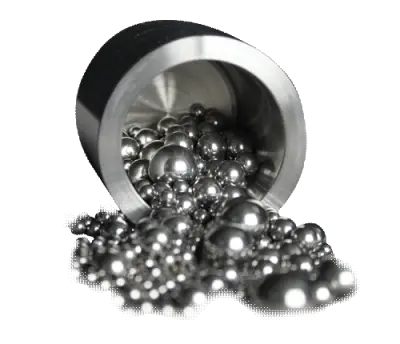
For users processing high-purity materials, agate balls are the optimal choice. If the sample is extremely hard (e.g., carbides), consider tungsten carbide mill balls but note the potential for metallic contamination. For routine grinding of non-critical materials, steel or zirconia balls may offer higher energy transfer. Always match the ball size to the mill jar volume and desired final particle size for maximum efficiency.
Related Products
Get In Touch
Our professional team will reply to you within one business day. Please feel free to contact us!