

What is a Vertical Tube Furnace? A High-Temperature Tube Furnace for Fast Quenching and Controlled Atmosphere Sintering
Introduction
At its core, a vertical tube furnace is a specialized high-temperature thermal processing equipment used in materials science, chemical engineering, and industrial laboratories to rapidly heat, sinter, anneal, or quench samples under precisely controlled atmospheres or vacuum conditions. Unlike horizontal tube furnaces, the vertical orientation offers unique advantages: the sample is loaded from the top, allowing for easy placement, gravity-assisted loading, and the ability to perform fast quenching by dropping the sample directly into a cooling medium. This makes the vertical tube furnace an ideal tool for studying phase transformations, diffusion kinetics, and material synthesis under extreme thermal conditions.
Core Function and Working Principle
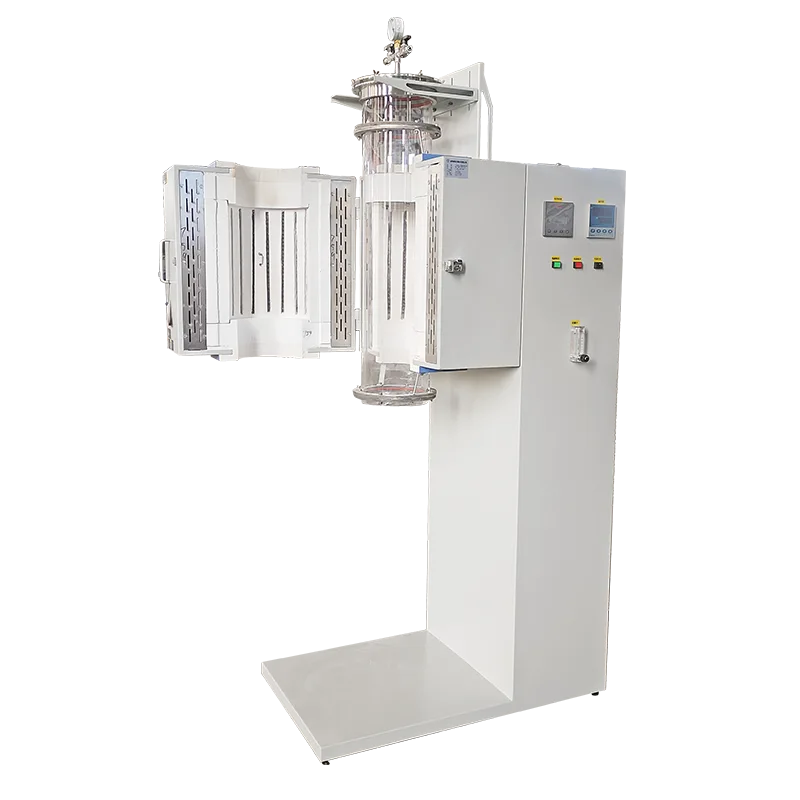
The vertical tube furnace transforms a material from its initial solid state (e.g., powder, bulk, or pre-formed shape) into a thermally treated final product with desired microstructure, phase composition, or mechanical properties. The core working component is a vertical quartz or alumina tube surrounded by a resistance heating element (typically Fe-Cr-Al-Mo wire) and a double-shell furnace housing with fan cooling. The sample is placed inside the tube, often in a crucible or on a sample holder, and the tube is sealed at both ends with vacuum flanges. The furnace can be evacuated by a vacuum pump or filled with inert gas (e.g., argon, nitrogen) to prevent oxidation or contamination.
The heating system is controlled by a 30-segment programmable PID controller, which can precisely ramp up to a maximum temperature of 1200°C (working temperature 1100°C) at a heating rate of 0~20°C/min. Temperature accuracy is within ±1°C. The vertical design allows for rapid quenching: after reaching the desired temperature, the sample can be quickly lowered into a water bath or oil bath located below the furnace, enabling fast cooling rates unobtainable in horizontal furnaces. This capability is crucial for studying martensitic transformations, glass formation, and other time-sensitive thermal processes.
Core Components and Key Technologies
Although the vertical tube furnace is a single product type, its performance depends on several critical components:
- Furnace Tube: Made of high-purity quartz or alumina, capable of withstanding temperatures up to 1200°C. The tube diameter is typically 60 mm or 80 mm, with a heating zone length of 300 mm or 450 mm.
- Heating Elements: Fe-Cr-Al-Mo wire provides uniform heating and long service life. The furnace shell is double-layered with fan cooling to maintain safe external temperatures.
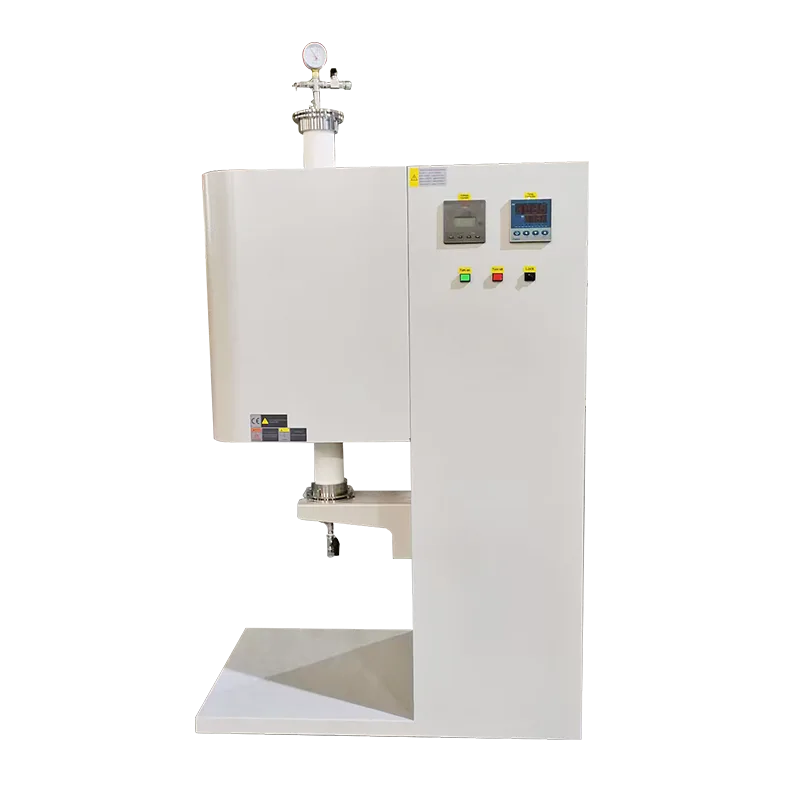
- Vacuum Sealing System: Includes stainless steel vacuum flanges, O-rings, and a vacuum gauge. The system can achieve a vacuum level down to 10⁻¹ Pa or better, depending on the pump.
- Temperature Controller: A 30-segment programmable PID controller allows complex thermal profiles (e.g., multi-step heating, holding, and cooling). The controller can also be connected to a computer for data logging.
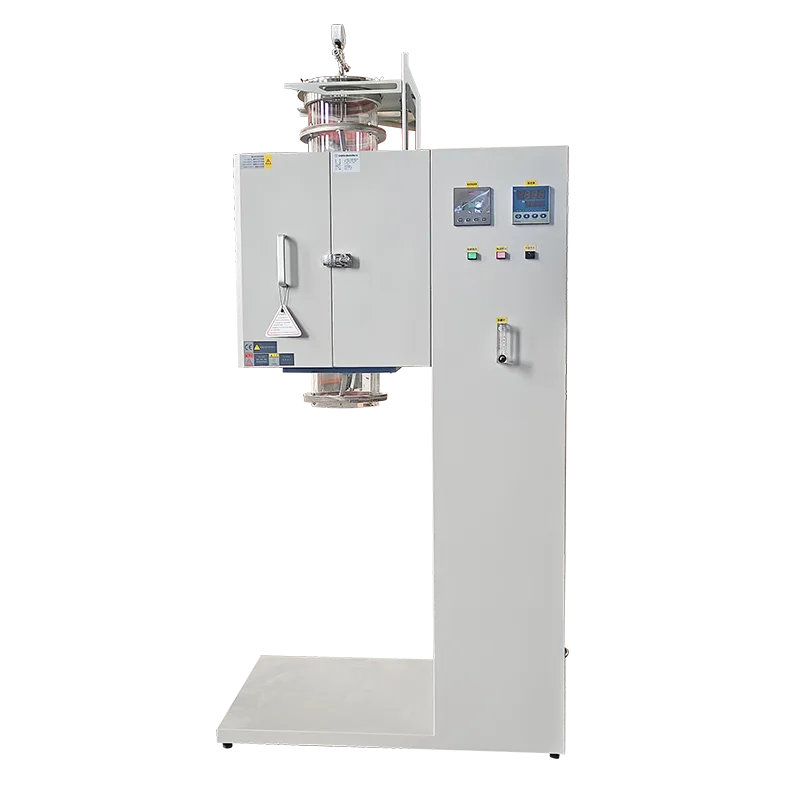
- Safety Features: Over-temperature protection, over-current protection, and a cooling fan interlock ensure safe operation.
Key Performance Indicators and Selection Criteria
When selecting a vertical tube furnace, users should evaluate the following indicators:
- Maximum Temperature and Working Temperature: The XY-1200VTF offers a maximum of 1200°C and a working temperature of 1100°C. For higher temperature requirements, consider models with molybdenum disilicide (MoSi₂) elements (up to 1600°C).
- Temperature Uniformity and Accuracy: A ±1°C accuracy is standard for most lab applications. Longer heating zones provide better uniformity for larger samples.
- Heating Rate: The ability to ramp up to 20°C/min is sufficient for most thermal treatments. Faster rates may be needed for rapid thermal processing (RTP) but can cause thermal shock to the tube.
- Vacuum Level: For processes requiring high vacuum (e.g., thin-film deposition), a turbo pump may be necessary. The standard pump reaches 10⁻¹ Pa, sufficient for most sintering and annealing.
- Tube Material and Diameter: Quartz tubes are cost-effective for up to 1100°C, while alumina tubes are required for higher temperatures or aggressive chemical environments. A larger diameter accommodates bigger samples but reduces heating rate uniformity.
- Programmability: A 30-segment controller is versatile for complex recipes. For advanced research, a touch-screen interface or remote control option may be desirable.
- Cooling System: The double-shell with fan cooling is standard. For high-throughput applications, water-cooled flanges can be added to reduce cool-down time.
Application Areas and Selection Advice
Vertical tube furnaces are widely used in:
- Materials Research: Sintering of ceramics, synthesis of nanomaterials, calcination of catalysts, and heat treatment of metals.
- Chemical Engineering: Pyrolysis, gas-solid reactions, and chemical vapor deposition (CVD) under controlled atmospheres.
- Quality Control: Thermal stability testing, ash content determination, and failure analysis of electronic components.
- Education: Teaching laboratories for thermodynamics, phase diagrams, and metallography.
For first-time buyers, consider the typical sample size and temperature range. If you primarily work with small samples (e.g., 10–50 g), a 60 mm diameter tube with 300 mm heating zone is sufficient. For larger batches or longer samples, choose the 80 mm diameter tube with 450 mm heating zone. If you need to perform quenching experiments, confirm that the furnace includes a quick-release mechanism or a bottom-loading port. Always check the availability of accessories such as tube plugs, spare thermocouples, and sealing flanges — the standard package includes these items, but additional consumables may be needed.
References
Related Products
Get In Touch
Our professional team will reply to you within one business day. Please feel free to contact us!