

What is a Vacuum Drying Oven? A Thermal Processing Equipment Used for Low-Temperature Moisture Removal and Powder Stabilization
Opening Definition
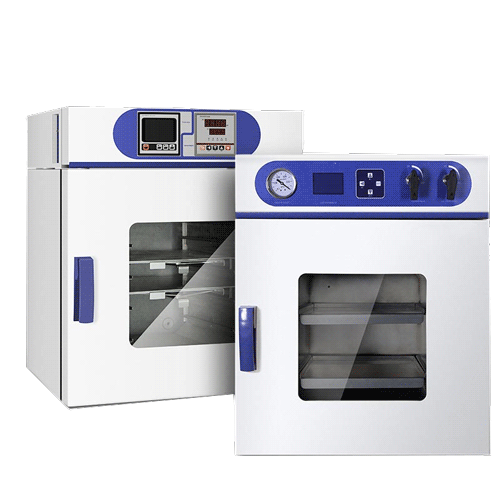
From a core perspective, a vacuum drying oven is a specialized thermal processing device widely utilized in materials science, chemical engineering, and pharmaceutical industries to remove moisture and volatile solvents from heat-sensitive or easily oxidizable materials under reduced pressure. Unlike conventional convection ovens, it operates by lowering the boiling point of liquids through vacuum conditions, enabling efficient drying at significantly lower temperatures while preserving the original crystal structure and chemical composition of the target powder.
Core Functions & Working Principles
The fundamental function of this equipment is to transform wet or solvent-laden powders and samples into dry, stable states without compromising their structural integrity. The core working mechanism relies on creating a sealed chamber where ambient air is evacuated to achieve a specific vacuum level. As the internal pressure drops, the evaporation temperature of water and organic solvents decreases dramatically. When combined with controlled heating elements, typically electric resistance heaters, the system facilitates a rapid phase transition from liquid to vapor.
This process is governed by key parameters such as vacuum degree, temperature setpoint, and airflow circulation rate. Maintaining an optimal vacuum level prevents thermal degradation and oxidation, while precise temperature control ensures uniform heat distribution across the sample trays. The vapor generated is continuously extracted by the vacuum pump, often passing through cold traps or condensers to recover solvents and protect the pumping system. For applications requiring higher throughput or non-vacuum conditions, operators may alternatively consider a circulation oven, which relies solely on forced hot air convection.
Key Components & Core Technologies
The efficiency and reliability of a vacuum drying oven hinge on several critical components. The primary chamber is constructed from high-grade stainless steel to ensure corrosion resistance, thermal stability, and ease of cleaning. Heating systems typically utilize forced convection fans coupled with insulated heating panels to eliminate hot spots and guarantee consistent drying results. Advanced models integrate digital PID controllers that monitor and adjust temperature and vacuum levels in real-time, providing exceptional repeatability.
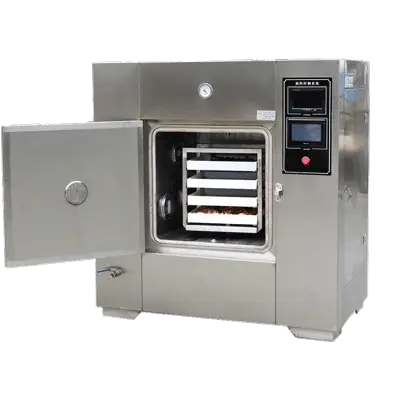
Heat transfer in a vacuum environment primarily occurs through direct conduction via tray contact and thermal radiation from the chamber walls, as gas-phase convection is minimized. To compensate, manufacturers often incorporate rotating drum attachments or oscillating tray mechanisms that constantly expose fresh material surfaces to the heating elements, drastically reducing drying cycles. Safety and automation are equally vital. Standard configurations include over-temperature protection, pressure relief valves, and door interlock mechanisms to prevent operational hazards during extended drying cycles. Modern units also feature programmable logic controllers (PLCs) with multi-stage temperature and vacuum profiling, allowing researchers to customize drying curves tailored to specific material properties. For highly sensitive biological or polymeric samples, advanced alternatives like a microwave vacuum drying oven or a vacuum freeze-drying oven may be employed to preserve delicate molecular structures.
Key Performance Indicators & Selection Points
When selecting a vacuum drying oven, users should prioritize several core metrics to match their experimental or production needs. Chamber capacity and tray configuration determine throughput, ranging from compact desktop units for laboratory-scale research to large industrial chambers for pilot manufacturing. Temperature uniformity and accuracy are crucial; high-end models maintain deviations within ±1°C across the entire working zone, which is essential for batch consistency. Tray design also matters: perforated trays enhance vapor escape for free-flowing powders, while solid trays prevent fine particles from falling through during agitation.
Vacuum performance, typically measured in millibars (mbar) or Pascals (Pa), dictates how effectively low-boiling-point substances can be removed. The choice of vacuum pump significantly impacts operational costs and base pressure. Rotary vane pumps offer cost-effective solutions for general lab use, while dry screw or diaphragm pumps are preferred when handling corrosive vapors or requiring oil-free environments. Energy efficiency and operational noise levels also play significant roles, especially for continuous laboratory operations. Furthermore, look for units equipped with data logging capabilities and remote monitoring interfaces to enhance reproducibility and compliance with quality standards like GLP or GMP. Regular maintenance of seals and vacuum pumps is required to sustain long-term performance.
Application Fields & Selection Advice
Vacuum drying ovens are extensively applied in battery material preparation, ceramic powder processing, polymer synthesis, catalyst development, and pharmaceutical formulation, where preserving particle morphology, preventing agglomeration, and avoiding oxidative reactions are critical. For academic researchers handling small batches, a desktop model with precise PID control and multiple interchangeable tray slots offers maximum flexibility. Industrial users requiring high throughput, solvent recovery, or automated cycling should opt for larger chambers equipped with robust mechanical vacuum pumps and external condensation systems. Always match the chamber volume, heating power, and vacuum rating to your specific material properties and production scale to optimize energy consumption and minimize drying time.
References
Related Products
Get In Touch
Our professional team will reply to you within one business day. Please feel free to contact us!