
What is a Tungsten Carbide Mill Ball? A High-Performance Grinding Media for Ball Mills

What is a Tungsten Carbide Mill Ball?
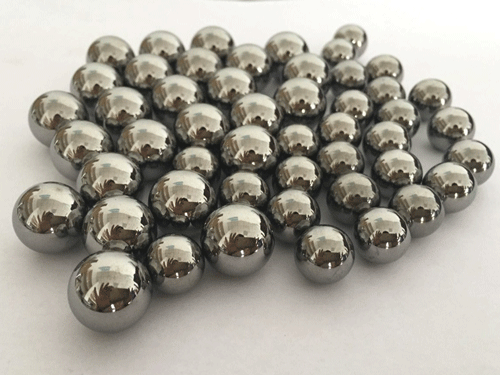
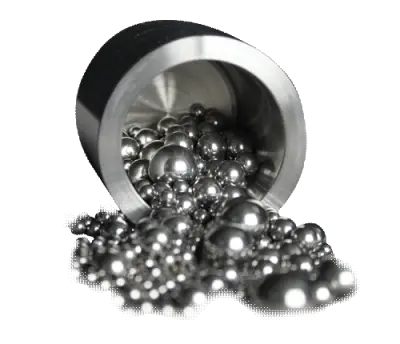
At its core, a tungsten carbide mill ball — also widely known as a tungsten steel ball or cemented carbide ball — is a high-performance grinding media used in ball mills to pulverize, mix, and homogenize materials. It is a spherical component made from a composite of tungsten carbide (WC) and a metallic binder such as cobalt (Co) or nickel (Ni) through powder metallurgy. Laboratories and industries rely on these balls in planetary ball mills, drum ball mills, and vibration ball mills to achieve ultra-fine grinding and contamination-free milling.
Core Function and Working Principle
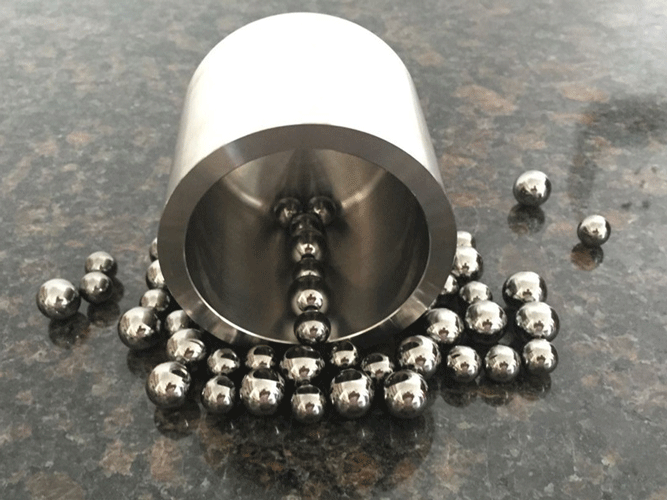
Tungsten carbide mill balls function as the primary grinding medium inside a ball mill jar. When the mill rotates or vibrates, the balls are lifted and then cascade or traverse, creating powerful impact, attrition, and shear forces that break down coarse particles into fine powders. The high density (typically 14.6–14.9 g/cm³) and extreme hardness (89.8–90.5 HRA) of tungsten carbide enable these balls to deliver significantly higher grinding efficiency compared to conventional steel or ceramic balls.
The working principle directly affects final product fineness. Key parameters influencing grinding results include the ball-to-material ratio, rotational speed, ball size distribution (mix of large, medium, and small diameters), and milling time. For example, a higher proportion of small balls increases surface contact for fine grinding, while larger balls provide stronger impact for initial size reduction. Tungsten carbide balls maintain their shape longer under these stresses, ensuring consistent grinding performance over extended periods.
Main Types and Classifications
Tungsten carbide mill balls are available in several varieties, each tailored for specific applications:
- Rough Grinding Balls (Blank Balls): These are as-sintered balls with a slightly rough surface and a dimensional tolerance of 0 to +0.2 mm. They are ideal for coarse grinding and high-wear operations where surface finish is not critical.
- Precision Grinding Balls (Fine Ground & Polished): Made through grinding and polishing processes, these balls achieve precise diameters (down to G3–G3000 grade accuracy) and a mirror-like surface. They are essential for high-precision applications such as bearing balls and valve balls.
- Bearing Balls & Valve Balls: Specifically produced for use in precision bearings, check valves, and spray nozzles where roundness, surface finish, and size consistency are paramount.
- Customized Balls: Custom dimensions (0.3 mm to 60 mm diameter) and binder compositions (YG6, YG8, YN, YT, YW series) can be ordered to match specific milling requirements, such as increased toughness or corrosion resistance.
Choosing between types depends on the target particle size, contamination tolerance, and mechanical stress of the process. For instance, precision balls are mandatory in planetary ball mills that demand reproducible analytical results, while rough balls suffice for bulk material crushing.
Key Performance Indicators and Selection Criteria
When selecting tungsten carbide mill balls, consider the following parameters:
- Hardness and Wear Resistance: Hardness ranges from 89.8 to 90.5 HRA, making them 10–100 times more wear-resistant than traditional steel balls. Higher hardness leads to lower contamination and longer service life.
- Density: With a density of ~14.6–14.9 g/cm³, tungsten carbide balls provide greater kinetic energy per ball, improving grinding efficiency, especially in high-viscosity slurries.
- Size Range and Tolerance: Available from 0.3 mm to 60 mm in diameter. Precision grades (e.g., G10–G100) ensure consistent ball-to-ball uniformity, critical for maintaining reproducible milling results.
- Binder Composition: Cobalt binder (e.g., YG6, YG8) offers a good balance of hardness and toughness; nickel binder enhances corrosion resistance for wet milling of aggressive chemical slurries.
- Surface Finish: Polished balls reduce wear on mill liners and minimize material loss, while rough balls offer higher initial grinding rates.
- Compatibility: Must match the mill jar material (e.g., tungsten carbide jar, stainless steel jar) to avoid galvanic corrosion or cross-contamination.
Application Fields and Selection Advice
Tungsten carbide mill balls are widely used in powder metallurgy, electronics (ceramic capacitors, magnetic materials), battery materials (lithium-ion cathode/anode powders), cemented carbide tools recycling, and geological sample preparation. They excel in scenarios demanding ultra-high purity and minimal contamination because their wear does not introduce soft metallic impurities like iron or copper.
For laboratory planetary ball mills requiring nanoscale grinding, choose precision polished balls of 0.5–5 mm diameter with high cobalt binder (e.g., YG8) to balance durability and cost. For industrial drum mills processing tons of minerals, larger rough balls (10–50 mm) with YG6 grade offer best economy. Always consult the mill manufacturer’s recommended ball size and material compatibility before ordering.
References
Related Products
Get In Touch
Our professional team will reply to you within one business day. Please feel free to contact us!