

What is a Stainless Steel Dust-Free Crusher? A Specialized Crushing Equipment for Clean, Dust-Free Material Processing in Laboratories and Industries
What is a Stainless Steel Dust-Free Crusher? A Specialized Crushing Equipment for Clean, Dust-Free Material Processing
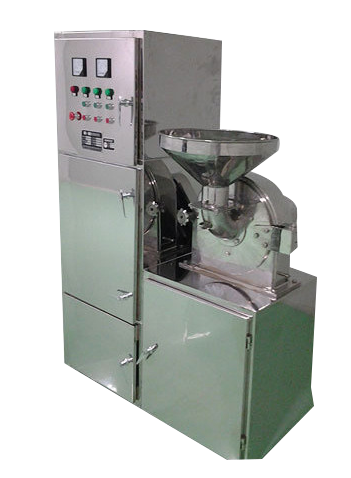
From the core, a stainless steel dust-free crusher is a professional crushing equipment that laboratories, pharmaceutical factories, food processing plants, and chemical industries use to reduce materials into fine powders while maintaining a clean, dust-free working environment. It combines the robust crushing capability of a mill with a sealed system that prevents dust leakage, making it ideal for processing sensitive, toxic, or valuable materials.
Core Function and Working Principle
The primary function of a stainless steel dust-free crusher is to transform bulk or granular materials into a uniform fine powder without generating airborne dust. The equipment typically consists of a crushing chamber, a high-speed rotating blade or hammer assembly, a stainless steel mesh screen, and a sealed collection system. The material is fed into the crushing chamber, where it is impacted, sheared, and ground by the rotating blades. The fine particles then pass through a mesh screen of specified size, while oversized particles are retained for further crushing. The entire process is enclosed, and the dust is contained within the system, often with the help of a vacuum or cyclone separator.
Key parameters affecting the final particle size include the rotation speed of the blades, the mesh size of the screen, and the feed rate. By adjusting these parameters, operators can achieve particle sizes ranging from coarse granules to fine powders, typically from 20 mesh to 120 mesh. The stainless steel construction ensures corrosion resistance, easy cleaning, and compliance with sanitary standards required in food and pharmaceutical industries.
Core Components and Key Technologies
A stainless steel dust-free crusher integrates several critical components to ensure reliable and clean operation:
- Crushing Chamber: Made of high-grade stainless steel (304 or 316L), the chamber is designed with smooth surfaces to minimize material adhesion and facilitate cleaning. The chamber geometry is optimized for efficient material flow and uniform crushing.
- Blade Assembly: The blades are typically made of hardened stainless steel or tool steel, sharpened to deliver high impact and shear forces. The number and shape of blades can be customized based on the material properties (e.g., brittle, fibrous, or sticky).
- Mesh Screen: Interchangeable screens with different aperture sizes (from 10 mesh to 200 mesh) allow precise control of the final particle size. The screen is held in place by a quick-release clamp for easy replacement.
- Dust Containment System: A sealed hopper, gasketed lid, and optional vacuum port or dust collector connection ensure that no dust escapes during operation. Some models include a bag filter or cyclone separator for efficient collection.
- Drive System: A high-torque motor with variable speed control (typically 1000-10000 rpm) provides flexibility for different materials. The drive is coupled to the blade shaft via a belt or direct drive, with overload protection.
Key Performance Indicators and Selection Criteria
When selecting a stainless steel dust-free crusher, users should consider the following performance indicators:
- Processing Capacity: Typically ranges from 5 kg/h for small laboratory models to 500 kg/h for industrial units. Choose based on your batch size or production throughput.
- Particle Size Control: The ability to adjust the final fineness by changing screens or speed. Look for models that offer a wide range of mesh sizes (e.g., 20-200 mesh) and stable particle size distribution.
- Material Compatibility: Ensure the crusher can handle your material's hardness, moisture content, and abrasiveness. Stainless steel construction is suitable for most non-corrosive materials, but for highly acidic or salty materials, 316L stainless steel is recommended.
- Cleaning and Maintenance: Quick-disassembly design, smooth surfaces, and tool-free screen changes reduce downtime. Some models are designed for CIP (clean-in-place) or easy disassembly.
- Automation and Safety: Features such as overload protection, emergency stop, interlock switches, and optional remote control enhance safety. Programmable logic controllers (PLC) are available for automated batch processing.
- Noise Level: Dust-free crushers are often quieter than traditional crushers, but noise levels can vary; check the manufacturer's specifications.
Application Areas and Selection Recommendations
Stainless steel dust-free crushers are widely used in:
- Pharmaceutical Industry: For crushing active pharmaceutical ingredients (APIs), herbal extracts, and excipients into fine powders while maintaining sterility and preventing cross-contamination.
- Food Processing: For grinding spices, sugar, grains, and dried fruits into powders without dust pollution, meeting food safety standards.
- Chemical Industry: For processing pigments, dyes, resins, and catalyst materials that require controlled particle size and dust-free handling.
- Laboratories: For small-scale crushing of samples, such as ores, ceramics, or polymers, for analysis and research.
For users who need to process large volumes continuously, a heavy-duty industrial model with a higher motor power and a larger collection bin is recommended. For laboratories or small-batch production, a compact benchtop model with a sealed collection bag is more suitable. Always consider the material's hardness and abrasiveness to select the appropriate blade material and screen size.
References
For more product details, please visit the Stainless Steel Dust-Free Crusher page.
Related Products
Get In Touch
Our professional team will reply to you within one business day. Please feel free to contact us!