

What is a Soil Grinder and Sieve Machine? A Sample Preparation Equipment for Soil Analysis
Introduction
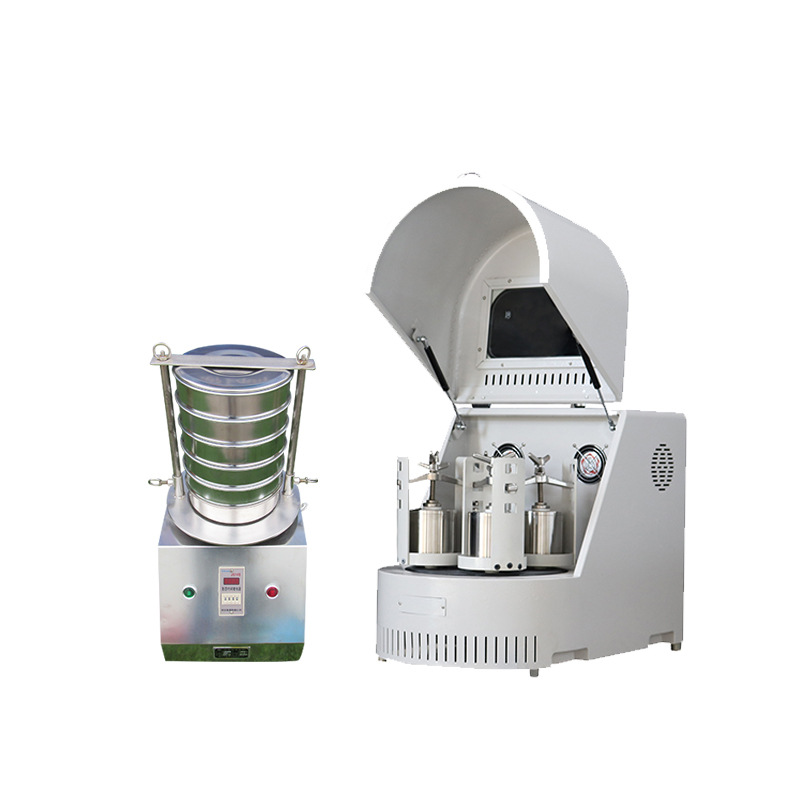
From the core, a soil grinder and sieve machine is a specialized sample preparation device that laboratories, agricultural research institutes, and environmental monitoring centers use to convert dried soil samples into a uniform, fine powder and simultaneously separate them by particle size for subsequent chemical, physical, or mineralogical analysis. This equipment integrates two critical functions—grinding and sieving—into a single, efficient workflow, eliminating the need for separate devices and reducing cross-contamination risks.
Core Function and Working Principle
The basic function of a soil grinder and sieve machine is to transform coarse, aggregated soil particles into a homogeneous fine powder (typically passing a 10‑mesh or finer sieve) while classifying the ground material by size. The core working principle relies on a combination of mechanical impact and abrasion inside a grinding chamber, followed by controlled vibration through a stack of sieves.
Typically, a dried soil sample is fed into a hopper and enters a grinding zone where rotating hammers, plates, or a ceramic mortar/pestle assembly crushes the soil against a stationary liner. The grinding mechanism can be a hammer mill, a roller mill, or a planetary ball mill configuration, depending on the model. The ground material then falls onto a vibrating sieve stack (often 10‑mesh, 50‑mesh, 100‑mesh, etc.). The vibration frequency and amplitude are adjustable, allowing the operator to achieve a desired particle size distribution. The final product—a fine, uniform soil powder—is collected in a pan or container, while oversize particles are retained on the sieves for further grinding or discard.
Key process parameters that affect the final product include grinding time, rotational speed (or impact frequency), sieve mesh size, and the feed rate. For example, research has shown that a hammer‑mill type grinder produces finer particles with a broader distribution compared to a roller‑type grinder, which tends to yield coarser, more uniform particles. The choice of grinder type directly influences the weight of soil scooped in subsequent analysis, thereby affecting the measured concentrations of extractable nutrients like phosphorus, potassium, and calcium.
Core Components and Key Technologies
While the product category is relatively specialized, modern soil grinder and sieve machines incorporate several advanced components:
- Grinding Mechanism: Options include hammer mills (high‑speed impact), roller mills (compression and shear), or planetary ball mills (high‑energy impact and friction). The selection determines the final particle size distribution and the degree of sample homogenization.
- Sieve System: A stack of woven wire mesh sieves (typically stainless steel) with mesh sizes ranging from 10‑mesh (2.0 mm) to 100‑mesh (0.149 mm) or finer. The sieves are mounted on a vibration platform driven by an eccentric motor or electromagnetic shaker.
- Control Unit: Digital timers, speed controllers, and vibration amplitude adjusters allow precise and repeatable operation. Some advanced models feature programmable cycles for automated grinding-sieving sequences.
- Dust Collection: An integrated dust extraction system or airtight enclosure prevents fine particles from escaping into the laboratory environment, ensuring operator safety and sample integrity.
Key Performance Indicators and Selection Criteria
When selecting a soil grinder and sieve machine, users should consider the following metrics:
- Processing Capacity: Typically ranges from 100 g to 5 kg per batch, depending on the model. For high‑throughput laboratories, continuous feed systems are available.
- Grinding Fineness: The ability to achieve a consistent particle size, e.g., 95% passing a 100‑mesh sieve. This is critical for soil test methods that require a specific particle size.
- Sieve Accuracy: The machine should maintain a stable vibration amplitude to ensure efficient sieving without blinding (clogging) of mesh openings.
- Automation and Programmability: Digital controls with memory for different protocols reduce operator error and increase reproducibility.
- Ease of Cleaning: Quick‑release grinding chambers and sieve trays that can be easily disassembled and cleaned minimize cross‑contamination between samples.
- Noise and Dust Levels: Enclosed designs with sound‑dampening materials and HEPA‑filtered dust extraction are preferable for lab environments.
Application Fields and Selection Recommendations
Soil grinder and sieve machines are primarily used in:
- Agricultural Soil Testing: For determining nutrient content (N, P, K, Ca, Mg), pH, organic matter, and texture.
- Environmental Monitoring: For assessing soil contamination, heavy metals, and pollutants.
- Geotechnical Engineering: For particle size analysis (gradation) and compaction tests.
- Geological and Mineralogical Research: For preparing soil and sediment samples for X‑ray diffraction, X‑ray fluorescence, or other spectroscopic analyses.
For laboratories that process a high volume of samples with diverse soil types, a model with a hammer‑mill grinder and a multi‑layer sieve stack (e.g., 10‑mesh, 50‑mesh, 100‑mesh) offers flexibility. For applications requiring ultra‑fine grinding (e.g., < 75 µm), a planetary ball mill configuration is recommended. When working with sticky or clay‑rich soils, a roller‑type grinder may be less prone to clogging than a hammer mill.
References
- Soil grinder and sieve machine – TENCAN Product Page
- Planetary ball mill (semi‑circular model)
- Vertical square planetary ball mill
Related Products
Get In Touch
Our professional team will reply to you within one business day. Please feel free to contact us!