

What is a Shear Emulsifier? A High-Speed Mixing Device for Creating Stable Emulsions
What is a Shear Emulsifier?
At its core, a shear emulsifier is a specialized high-speed mixing device that industries and laboratories use to transform immiscible liquids (such as oil and water) into a stable, homogeneous emulsion or fine dispersion. It achieves this through intense mechanical shear forces generated by a rapidly rotating rotor inside a stationary stator, breaking down droplets into micrometer or even sub-micrometer sizes. This equipment is indispensable for producing high-quality creams, lotions, sauces, paints, and countless other products where uniform texture and stability are critical.
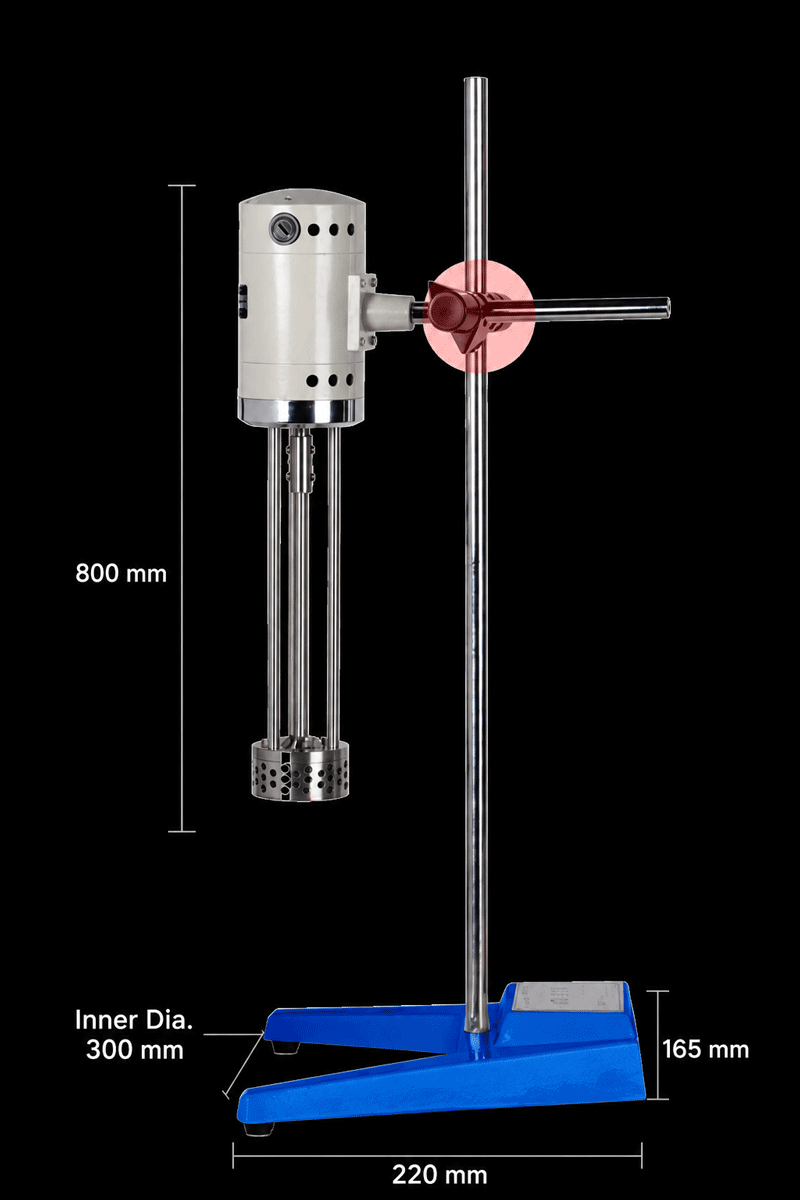
Core Function and Working Principle
The primary function of a shear emulsifier is to turn a coarse mixture of two or more immiscible phases into a fine, stable emulsion. The working principle relies on the rotor-stator system: the rotor spins at high speed (often thousands of RPM), creating a powerful suction that draws the material into the narrow gap between the rotor and stator. Inside this gap, the material experiences intense hydraulic shear, turbulence, and cavitation, which break down large droplets into tiny, uniform ones.
Key process parameters include rotor speed, gap width, and processing time. A higher rotor speed and a smaller gap generate stronger shear forces, resulting in smaller droplet sizes and more stable emulsions. The temperature of the material can also be controlled to prevent overheating, especially for heat-sensitive formulations. The shear emulsifier can handle a wide range of viscosities, from low-viscosity liquids to thick pastes, making it versatile for various applications.
Core Components and Key Technologies
Although shear emulsifiers come in different sizes and configurations, they share several essential components:
- Rotor-Stator Assembly: The heart of the machine. The rotor can have one, two, or three stages (concentric rows of teeth), each stage increasing the shear intensity. The stator is stationary and shaped to match the rotor.
- Drive System: Usually a variable-speed motor (electric or hydraulic) that provides precise control over rotor speed. Stepless speed regulation allows operators to adjust shear intensity for different materials.
- Working Head: The part that contacts the material. It is typically made of stainless steel (304 or 316) for corrosion resistance and hygiene. Some models offer interchangeable heads for different applications.
- Lifting and Mounting System: In industrial models, the emulsifier head can be mounted on a hydraulic or manual lift that allows easy positioning into the mixing vessel. Laboratory models are often hand-held or clamp-mounted.
- Digital Display & Control: Many modern units feature a digital display showing real-time speed, timer, and sometimes torque, enabling precise process reproducibility.
Key Performance Indicators and Selection Criteria
When selecting a shear emulsifier, users should consider the following critical performance indicators:
- Processing Capacity and Flow Rate: Laboratory models typically handle 1–20 liters per batch, while industrial units can process hundreds of liters per hour. For continuous production, inline shear emulsifiers are available.
- Shear Intensity and Particle Size Control: The maximum rotor speed and number of stages determine the achievable droplet size. For nano-emulsions, three-stage or high-speed models are required.
- Power and Energy Efficiency: Power ranges from 0.55 kW for small lab units to over 10 kW for production machines. Higher power does not always mean better results; matching power to viscosity and volume is key.
- Automation and Programmability: Advanced models offer programmable speed profiles, timers, and data logging for consistent quality and GMP compliance.
- Ease of Cleaning and Maintenance: Quick-disassembly designs allow easy access to the rotor-stator for cleaning between batches, preventing cross-contamination.
Application Fields and Selection Advice
Shear emulsifiers are widely used in:
• Cosmetics & Personal Care: Creams, lotions, sunscreens, shampoos.
• Food & Beverage: Mayonnaise, sauces, dressings, dairy products.
• Pharmaceuticals: Ointments, emulsions for drug delivery, vaccines.
• Chemical & Paint: Pigment dispersions, adhesives, lubricants, inks.
• Biotechnology: Cell disruption, sample homogenization.
For laboratory R&D, a compact benchtop shear emulsifier with digital speed control and multiple working heads is ideal for developing new formulations. For pilot-scale or small-scale production, a mobile or hydraulic lift model with a capacity of 5–50 L is suitable. For large-scale manufacturing, an industrial inline shear emulsifier integrated into a continuous process line ensures high throughput and consistent quality. Always consider the viscosity range, required droplet size, and batch size when choosing the right model.
References
Related Products
Get In Touch
Our professional team will reply to you within one business day. Please feel free to contact us!