

What is a Rotary Tube Furnace? A Thermal Processing Equipment for Continuous Powder Calcination and Sintering
What is a Rotary Tube Furnace? A Thermal Processing Equipment for Continuous Powder Calcination and Sintering
At its core, a rotary tube furnace is a specialized thermal processing device that materials scientists, chemists, and engineers use to continuously heat treat, calcine, or sinter powder materials under precisely controlled temperatures and atmospheres. Unlike conventional static tube furnaces, the rotary tube furnace incorporates a rotating cylindrical tube that constantly agitates the material, ensuring uniform heat distribution and efficient gas-solid contact. This makes it an indispensable tool for processes such as catalyst activation, battery material synthesis, metal oxide reduction, and ceramic powder calcination.
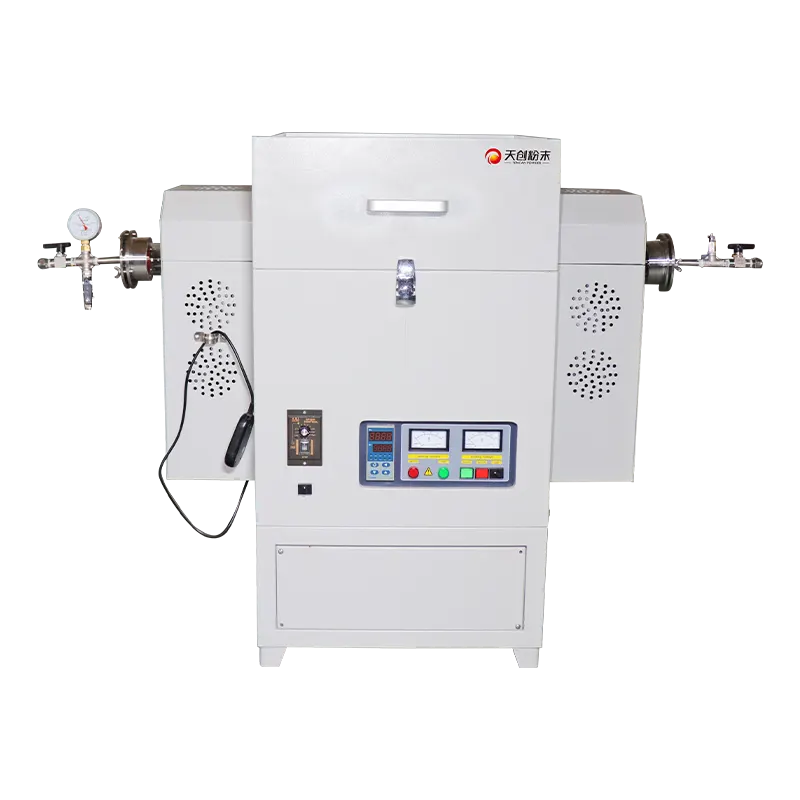
Core Function and Working Principle
The primary function of a rotary tube furnace is to transform raw powder or granular materials from an initial state into a final product with desired physical or chemical properties through controlled thermal treatment. The working principle revolves around a horizontal or slightly inclined rotating tube, which is heated externally by resistance elements. As the tube rotates, the material inside is continuously lifted and cascaded, promoting uniform exposure to the hot wall and any process gas flowing through the tube.
Key parameters influencing the final product include:
- Temperature profile: The furnace can achieve temperatures up to 1100°C or higher, with multiple heating zones that allow precise control of the thermal gradient along the tube length.
- Rotation speed: Typically variable from 1 to 20 rpm, controlling the residence time and mixing intensity of the powder.
- Atmosphere control: Users can introduce inert gases (e.g., N₂, Ar), reducing gases (H₂, CO), or oxidizing gases to create the desired chemical environment.
- Feed rate: For continuous operation, the powder is fed via a screw feeder or vibratory feeder, and the residence time is adjusted by the tube inclination and rotation speed.
This dynamic powder layer not only enhances heat transfer but also prevents agglomeration and ensures that each particle receives identical treatment, which is critical for reproducibility in research and production.
Key Components and Design Features
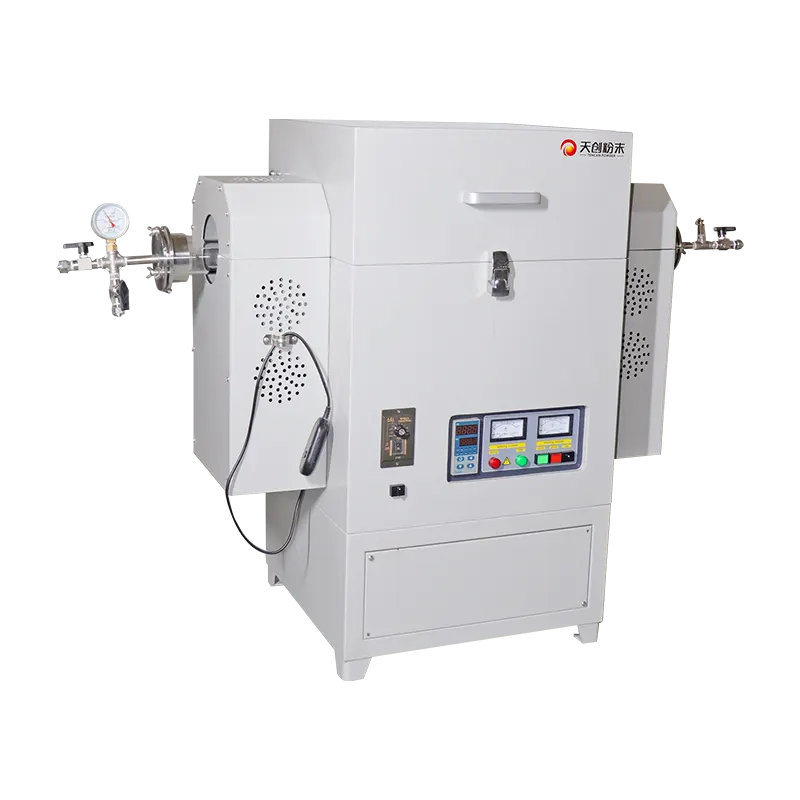
A typical rotary tube furnace consists of several essential subsystems:
Rotating Tube
The tube is usually made of quartz, alumina, or stainless steel, depending on the maximum operating temperature and chemical compatibility with the material. Quartz tubes are common for high-purity applications up to 1100°C, while alumina tubes can handle temperatures up to 1700°C.
Heating System
Resistance wire (e.g., Kanthal) or silicon carbide heating elements are embedded in the furnace chamber, providing uniform heat along the tube. Multi-zone control allows independent temperature settings for different sections.
Sealing and Gas System
To maintain a controlled atmosphere, the ends of the tube are sealed with O-rings or compression fittings. Gas inlet and outlet ports allow for flow of process gases, and a bubbler or exhaust system maintains safe pressure levels.
Drive Mechanism
A variable-speed motor drives the rotation of the tube via a belt or gear system, with precise speed control to match the required residence time.
Key Performance Indicators and Selection Criteria
When selecting a rotary tube furnace for your application, consider the following critical specifications:
- Maximum Operating Temperature: Must exceed your process temperature by at least 50°C for reliable performance. Common ranges are 1000-1200°C for quartz tubes and 1500-1700°C for alumina tubes.
- Tube Diameter and Length: Determines processing capacity and residence time. Typical lab-scale tubes have inner diameters of 30-80 mm and lengths of 600-1200 mm.
- Heating Zone Length: Longer hot zones provide better temperature uniformity. For continuous processes, a multi-zone design is preferred to create distinct temperature profiles.
- Temperature Control Accuracy: Look for PID controllers with ±1°C precision to ensure repeatable results.
- Gas Flow Control: Mass flow controllers (MFCs) enable precise regulation of gas composition and flow rate, essential for atmosphere-sensitive reactions.
- Feeding System: For continuous operation, a screw feeder with adjustable speed ensures consistent powder delivery.
- Safety Features: Over-temperature protection, gas leak detection, and emergency shut-off valves are important for handling flammable or toxic gases.
Efficiency is also a key factor: rotary tube furnaces generally offer better energy utilization compared to batch furnaces because they operate continuously and require less heat-up time for each batch.
Applications and Selection Advice
Rotary tube furnaces are widely used in:
- Advanced Materials Research: Synthesis of cathode materials for lithium-ion batteries, such as NMC and LFP, where uniform calcination in oxygen atmosphere is required.
- Catalyst Preparation: Activation of catalysts through controlled reduction or oxidation.
- Powder Metallurgy: Reduction of metal oxides to metal powders under hydrogen atmosphere.
- Ceramic and Glass Industry: Calcination of ceramic powders, glass frit, and pigments.
- Environmental Applications: Thermal treatment of waste materials or regeneration of activated carbon.
For laboratory-scale R&D, a compact rotary tube furnace with a quartz tube and manual feed is sufficient. For pilot or small-scale production, look for models with automated feeding, multiple heating zones, and integrated gas control systems. Always verify the compatibility of tube material with your powder to avoid contamination or chemical attack.
For more detailed specifications, please visit the Rotary Tube Furnace product page.
References
Related Products
Get In Touch
Our professional team will reply to you within one business day. Please feel free to contact us!