

What is Paddle Mill? A High-Efficiency Impact Crushing Equipment for Biomass and Feed Processing
Core Definition
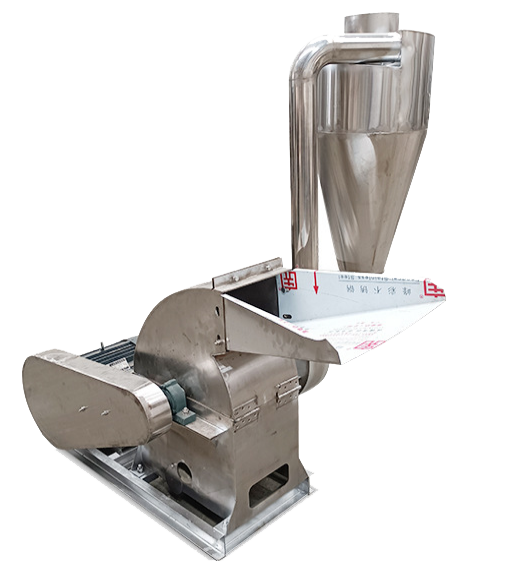
From a fundamental perspective, the paddle mill (frequently referred to as a hammer mill) is a specialized impact crushing device. Industries such as agriculture, bioenergy, and chemical manufacturing utilize it to reduce bulky solid materials into uniform granules or fine powders. By leveraging high-speed rotational kinetic energy, this equipment efficiently breaks down fibrous, brittle, or moderately hard substances without generating excessive heat, making it a cornerstone for pre-grinding and secondary size reduction processes.
Core Functions and Working Principles
The primary function of a paddle mill is to transform raw materials from a coarse, irregular state into a controlled, finer particle distribution. The core mechanism revolves around a rapidly rotating shaft mounted with free-swinging hammers or fixed paddles. As materials enter the crushing chamber through a feed hopper, they are subjected to intense centrifugal force, propelling them toward the striking elements. Upon impact, the material fractures against both the hammers and the stationary breaker plates lining the chamber walls.
The final particle size is primarily governed by the gap between the rotor tips and the bottom screen or grate. Once the crushed particles achieve a size small enough to pass through the screen apertures, they exit the chamber under gravity or airflow assistance. Critical process parameters include rotor peripheral speed, feed rate consistency, and screen mesh size. Optimizing these variables ensures a narrow particle size distribution while preventing over-grinding or motor overload. For complex multi-stage comminution workflows, paddle mills are often integrated downstream of primary crushers like a lab jaw crusher or paired with a Double Roll Crusher to handle varying hardness levels.
Key Components and Technical Architecture
A robust paddle mill consists of several interconnected subsystems designed for durability and operational stability. The rotor assembly serves as the heart of the machine, typically constructed from hardened steel to withstand continuous impact. It is balanced dynamically to minimize vibration during high-speed operation. The crushing chamber features replaceable wear liners or breaker plates that protect the outer casing and direct material flow toward the discharge screen.
The drive system, usually comprising a high-torque electric motor and belt or direct coupling transmission, delivers the necessary torque to maintain consistent rotor speeds even under fluctuating load conditions. Additionally, modern designs incorporate advanced feeding mechanisms, such as screw conveyors or vibratory feeders, to ensure a steady, metered input that prevents choking. Safety interlocks and dust extraction ports are standard features, aligning with industrial hygiene standards and facilitating seamless integration into closed-loop powder handling systems.
Key Performance Indicators and Selection Criteria
When evaluating a paddle mill for procurement, engineers and facility managers should prioritize several technical metrics. First, the processing capacity (measured in tons per hour or kilograms per hour) must align with production targets, considering both dry and wet feeding scenarios. Second, particle size control capability is directly tied to the available screen configurations; interchangeable grates allow operators to switch between coarse granulation and fine milling without major mechanical modifications.
Energy efficiency and thermal management are equally critical. High-performance models feature optimized aerodynamic chambers and low-friction bearings to reduce specific energy consumption per ton of output. Advanced units also integrate temperature monitoring and automated load regulation to prevent material degradation, especially for heat-sensitive compounds. Finally, maintenance accessibility significantly impacts total cost of ownership. Quick-release housing panels, tool-free screen changing mechanisms, and standardized bearing assemblies streamline routine inspections and extend service intervals.
Application Domains and Procurement Guidance
Paddle mills find extensive utility across diverse sectors. In the biomass and renewable energy industry, they preprocess wood chips, agricultural residues, and municipal solid waste into uniform fuel pellets. The animal feed sector relies on them for grinding grains, soybean meal, and mineral additives to meet nutritional formulation standards. Furthermore, chemical and pharmaceutical manufacturers employ these units for blending pigments, excipients, and catalyst supports. For laboratory-scale research, compact variants offer precise parameter control comparable to larger industrial setups, while pilot plants may require heavy-duty configurations similar to those found in a Small shredder line for initial size reduction.
Selecting the right model depends heavily on material characteristics and throughput requirements. Users processing highly abrasive ores should opt for tungsten carbide-lined chambers and reinforced rotors, whereas those handling organic biomass benefit from open-chamber designs with large screen openings to prevent clogging. Consulting technical specifications regarding motor power ratings, vibration isolation mounts, and compliance with CE/ISO safety standards will ensure long-term reliability and operational safety.
References
Related Products
Get In Touch
Our professional team will reply to you within one business day. Please feel free to contact us!