

What is a Liquid Nitrogen Planetary Ball Mill? A Cryogenic Mill for Soft Samples
What Is a Liquid Nitrogen Planetary Ball Mill?
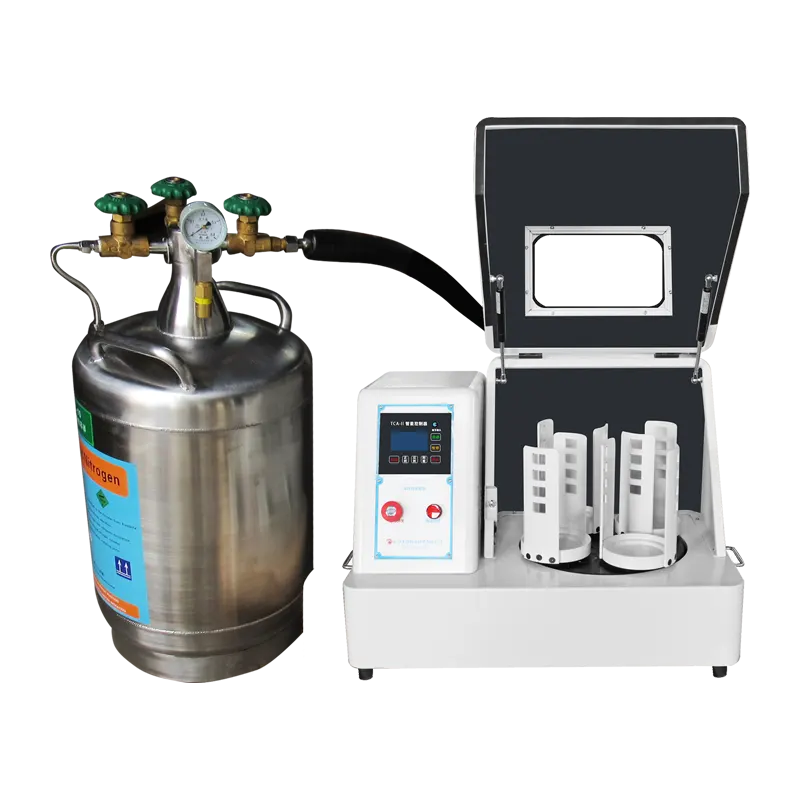
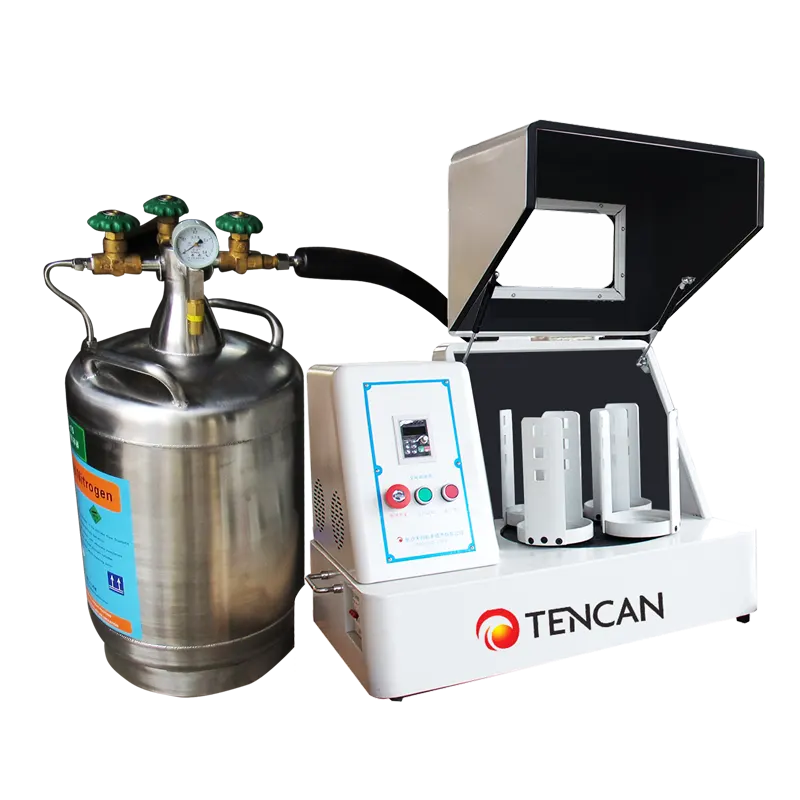
From its core, a liquid nitrogen planetary ball mill is a specialized grinding instrument that combines the high-energy motion of a planetary ball mill with a cryogenic cooling system. Materials science, pharmaceuticals, food science, and polymer research laboratories use it to pulverize, homogenize, and mix heat-sensitive or elastic samples that would otherwise soften, melt, or chemically degrade during conventional room-temperature milling. By introducing liquid nitrogen into the grinding environment, the equipment keeps samples brittle and inert, allowing mechanical impact and friction to break down particles without compromising their original properties. The Liquid Nitrogen Planetary Ball Mill offered by TENCAN is a representative example of this equipment class, built for researchers who need dependable size reduction at controlled low temperatures.
Core Functions and Working Principle
How Material Transforms from Coarse to Fine
A liquid nitrogen planetary ball mill transforms solid samples from coarse particles, chips, or chunks into fine powders or homogeneous pastes. The transformation relies on mechanical energy rather than chemical reagents. Inside sealed grinding jars, hard balls collide with the sample under the combined influence of rotation and centrifugal force. At the same time, liquid nitrogen or a chilled nitrogen atmosphere lowers the temperature of the jar and its contents. This cooling step is essential because many polymers, waxes, biological tissues, and elastomers become soft and sticky when milled at ambient temperature. When they are frozen below their glass transition temperature, they behave like brittle solids, shattering cleanly instead of smearing. The result is a free-flowing powder with a narrow particle size distribution and minimal thermal damage.
The Planetary Motion and Cryogenic Mechanism
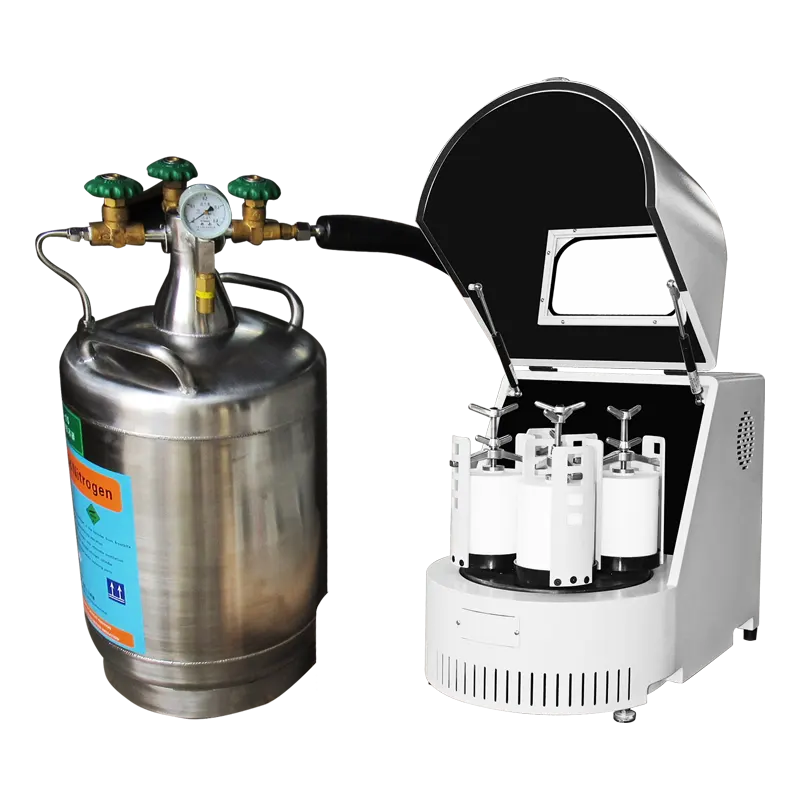
The term 'planetary' describes the motion of the grinding jars. Each jar sits on a rotating sun disc while also spinning around its own axis. Because the two rotations occur in opposite directions, the grinding balls inside the jar are subjected to alternating centrifugal forces. They travel up the inner wall of the jar and then crash down onto the sample, creating a combination of impact, shear, and friction. This complex motion produces much higher energy density than a simple tumbler or shaker mill. The cryogenic part of the system works alongside this mechanical action. Liquid nitrogen is either poured directly into a special cooling jacket or circulated through a closed loop around the jar. As the nitrogen evaporates, it absorbs heat and maintains the sample at a low temperature, often between -196 °C and -100 °C. The precise temperature depends on the cooling configuration, the milling time, and the thermal load of the sample. In a well-designed liquid nitrogen planetary ball mill, the grinding energy and the cooling capacity are balanced so that the sample remains brittle throughout the run.
Why Cooling Matters in High-Energy Milling
High-energy ball milling generates significant heat through friction and impact. Without cooling, the temperature inside a grinding jar can rise quickly, causing soft materials to melt, oxidize, or decompose. Even materials that are stable at room temperature may undergo phase changes or lose volatile components when heated during milling. Cryogenic cooling addresses this problem by continuously removing heat and keeping the sample below its critical transition temperature. It also changes the mechanical behavior of the material: brittle fracture becomes the dominant breakage mechanism, which is more energy-efficient for creating new surfaces. In addition, cold temperatures reduce the risk of agglomeration, because particles are less likely to stick together when they are frozen. For these reasons, liquid nitrogen cooling is not just a convenience but a functional requirement for many advanced milling applications.
Key Process Parameters and Their Effects
Several controllable parameters determine the final particle size, throughput, and sample integrity. The rotation speed, usually expressed in revolutions per minute, sets the kinetic energy of the grinding balls. Higher speeds shorten the milling time but also generate more heat, which places greater demand on the cryogenic system. The milling duration is another critical variable: longer grinding generally produces finer powder, but excessive time can lead to agglomeration or contamination from wear. The ball-to-powder ratio, the number and size of grinding balls, and the fill level of the jar all influence the frequency and force of collisions. The choice of jar and ball material matters as well. For cryogenic applications, jars made of hardened steel, zirconia, or tungsten carbide are common because they resist brittleness at low temperatures. Finally, the temperature set point and the flow rate of liquid nitrogen must be matched to the sample's thermal sensitivity. A pharmaceutical compound, for example, may require a colder set point than a rubber crumb. By tuning these parameters, an operator can achieve reproducible results from batch to batch.
Main Types and Configurations
Jar and Ball Material Options
Liquid nitrogen planetary ball mills are available with a range of grinding jar materials to suit different samples and contamination requirements. Stainless steel jars are durable and cost-effective, making them a good choice for hard, abrasive materials such as minerals and ceramics. Zirconia jars offer excellent wear resistance and minimize metal contamination, which is important for electronic materials and advanced ceramics. Tungsten carbide jars are extremely hard and dense, ideal for tough samples that require high impact energy. For biological or pharmaceutical work where trace metal contamination is unacceptable, agate, nylon, or PTFE jars may be used, although their cooling performance differs. The grinding balls should be matched to the jar material and the sample hardness. A general rule is to select balls that are denser and harder than the sample, but not so brittle that they fracture at cryogenic temperatures. Many suppliers, including TENCAN, provide compatible jar and ball sets that have been tested for low-temperature operation.
Cooling System Configurations
There are several ways to deliver cryogenic cooling in a planetary ball mill. The simplest design uses a manually filled liquid nitrogen reservoir or a direct pour into a specialized jar holder. This approach is economical and works well for short milling runs. A more advanced configuration employs a closed-loop circulation system that pumps liquid nitrogen or cold nitrogen gas through a jacket surrounding the jar. Closed-loop systems provide more stable temperature control and are better suited for long, automated processes. Some models also include a temperature sensor and a feedback controller that adjusts the nitrogen flow automatically. When choosing a configuration, consider the length of your typical milling cycle, the number of samples you process per day, and the level of automation you need. A research laboratory that runs occasional small batches may prefer a manual system, while a production or high-throughput facility may benefit from automated cooling.
Capacity and Station Options
Liquid nitrogen planetary ball mills come in various capacities, from single-jar benchtop units to multi-station models that process several samples simultaneously. A single-station mill is often sufficient for method development and exploratory research. Dual-station or four-station mills increase throughput and allow parallel grinding of different materials under identical conditions, which is useful for comparative studies. The jar volume typically ranges from a few milliliters to several liters. Larger jars can handle more sample per batch but require more cooling power and may take longer to reach the desired temperature. When selecting a capacity, balance your daily sample load against the available laboratory space and the cost of liquid nitrogen. It is also wise to choose a model with easily interchangeable jars, so you can switch between small and large volumes without replacing the entire machine.
Core Components and Their Functions
Understanding the main components helps users operate and maintain a liquid nitrogen planetary ball mill effectively. The grinding jars are the heart of the system; they hold the sample and the grinding balls and must withstand both mechanical stress and thermal shock. The jar holders or clamps secure the jars to the rotating disc and often incorporate cooling channels or jackets. The sun disc and the jar drive mechanism produce the planetary motion, and their bearings and belts require periodic inspection. The motor and control unit provide adjustable speed and timing, while the cooling system—whether a simple reservoir or a closed-loop circuit—delivers liquid nitrogen or cold gas to the jars. Temperature sensors and safety valves monitor conditions and prevent overpressure. A sturdy enclosure reduces noise and contains any spills. Each component contributes to the mill's performance, and regular maintenance of seals, bearings, and cooling lines will extend the equipment's service life.
Key Performance Indicators and Selection Points
Grinding Capacity and Throughput
The first performance indicator to evaluate is the effective grinding capacity. This is not simply the volume of the jar; it is the amount of sample that can be processed to the target particle size within a reasonable time. Manufacturers usually specify a recommended fill volume, often around one-third of the jar capacity, to leave room for ball movement. Throughput also depends on the number of stations and the cycle time. If your workflow requires many samples per day, a multi-station mill with quick-release jar clamps will save considerable time. For pilot-scale or small production work, consider a mill with larger jars and a robust cooling system that can sustain long runs. It is important to remember that cryogenic milling is generally slower than dry room-temperature milling because the sample must be kept cold, but the trade-off is better product quality for heat-sensitive materials.
Particle Size and Homogeneity
Particle size control is another core selection criterion. A liquid nitrogen planetary ball mill can typically reduce samples to the micrometer range, and with extended milling, to sub-micrometer sizes. The achievable fineness depends on the material's brittleness at low temperature, the energy input, and the milling time. Homogeneity is equally important. A well-mixed powder with a narrow size distribution is essential for reproducible analysis and consistent product performance. Look for a mill that offers variable speed control and programmable milling cycles, because these features allow you to fine-tune the energy input and avoid over-milling. Some systems also allow interval milling, where the mill pauses to let the sample cool before resuming. This reduces heat buildup and helps maintain a uniform particle size.
Energy Efficiency and Temperature Control
Energy consumption in cryogenic milling includes both the electricity used by the motor and the liquid nitrogen consumed for cooling. A well-insulated grinding chamber and an efficient cooling circuit can significantly reduce nitrogen usage. Temperature control precision is a key differentiator: a mill with a stable feedback loop will maintain the sample at the set point even as the grinding generates heat. This not only protects the sample but also prevents sudden temperature spikes that could cause partial melting or degradation. When comparing models, ask about the cooling rate, the minimum achievable temperature, and the recovery time after opening the chamber. These factors affect both the operating cost and the quality of the final powder.
Automation and Programmability
Modern liquid nitrogen planetary ball mills often include programmable controls that let users store and recall milling protocols. Automation features may include timed runs, speed ramps, pauses for cooling, and automatic nitrogen replenishment. For laboratories with strict reproducibility requirements, the ability to log process data such as temperature and speed is valuable. A touchscreen interface or computer connection simplifies method development and operator training. However, automation should not come at the expense of safety. Ensure that the mill has interlocks, pressure relief, and clear alarms for low nitrogen levels or overtemperature. The best choice is a system that automates routine tasks while keeping the operator informed and in control.
Maintenance and Operational Convenience
Ease of maintenance is often overlooked during purchasing but becomes important over years of use. Grinding jars and balls wear out and need replacement; choose a mill that uses standard, readily available consumables. The cooling system should be accessible for cleaning and inspection, and any seals or gaskets should be easy to replace. A modular design that allows quick removal of the jars and the cooling jacket reduces downtime. Also consider the noise level and the footprint of the machine, especially in a shared laboratory. Finally, check the availability of technical support and spare parts from the supplier. A reliable partner can help you troubleshoot issues and keep your mill running efficiently.
Applications and Selection Advice
Typical Industries and Materials
Liquid nitrogen planetary ball mills serve a wide range of industries. In materials science, they are used to prepare polymer blends, nanocomposites, and ceramic powders without thermal degradation. Pharmaceutical and biotech laboratories mill active ingredients, plant tissues, and biological samples for analysis, where heat can destroy the target compounds. Food science researchers grind spices, grains, and oily seeds that tend to clog conventional mills at room temperature. Environmental laboratories process soil, sediment, and waste samples for trace element analysis. In recycling and waste management, cryogenic milling helps separate and characterize mixed plastics and rubber. The common thread is the need to preserve the chemical and physical properties of the sample while achieving fine, uniform particles. The Liquid Nitrogen Planetary Ball Mill is designed to meet these diverse needs with adjustable cooling and grinding parameters.
How to Choose the Right Configuration
Selecting the right liquid nitrogen planetary ball mill depends on your sample type, batch size, and laboratory workflow. For small-scale research with a few grams of material, a benchtop single-station mill with a manually filled cooling reservoir is often sufficient. If you need to process multiple samples under identical conditions, a dual-station or four-station model will improve productivity. For pilot-scale work or materials that require very fine grinding, choose a mill with a powerful motor, a closed-loop cooling system, and programmable controls. Always consider the compatibility of jar and ball materials with your sample to avoid contamination. It is also wise to request a trial grinding test from the supplier, using your actual material, to confirm that the mill can achieve your target particle size. TENCAN and similar manufacturers can provide guidance on the best configuration for specific applications.
Safety and Best Practices
Working with liquid nitrogen requires attention to safety. Always wear cryogenic gloves, eye protection, and a lab coat. Handle liquid nitrogen in a well-ventilated area to prevent oxygen depletion. Never seal liquid nitrogen in a container without a pressure relief device. When using the mill, ensure that the jars are properly sealed and that the cooling system is functioning before starting a run. Allow the mill to reach the desired temperature before adding the sample, and avoid overfilling the jars. After milling, let the jars warm gradually to room temperature before opening them to prevent condensation and frostbite. Following these practices protects both the operator and the equipment, and it ensures consistent, high-quality results.
Frequently Asked Questions
Is Liquid Nitrogen Always Required?
No. A liquid nitrogen planetary ball mill can also be operated at room temperature or with other cooling media, depending on the sample. Liquid nitrogen is most useful when the material is soft, elastic, or heat-sensitive at ambient conditions. If your sample is already brittle and stable, you may not need cryogenic cooling. However, the mill's design should allow you to add or remove the cryogenic option easily, so you can adapt to different projects.
Can It Grind Materials That Are Sticky or Oily?
Yes. Sticky, oily, or waxy materials are precisely the type of samples that benefit most from cryogenic milling. When frozen, these substances become brittle and no longer adhere to the jar walls or the grinding balls. This prevents clumping and ensures efficient energy transfer. For very oily samples, you may need to pre-freeze the material or use a small amount of dry ice or liquid nitrogen before loading it into the jar.
What Safety Measures Should Be Considered?
Liquid nitrogen is extremely cold and can cause severe frostbite, so personal protective equipment such as cryogenic gloves, goggles, and a face shield are essential. Work in a well-ventilated area to avoid oxygen displacement from nitrogen gas. The mill should be equipped with pressure relief valves and temperature alarms. Always follow the manufacturer's instructions for filling, operating, and maintaining the cooling system. Proper training and clear standard operating procedures are the best way to ensure safety.
How Long Does a Typical Milling Run Take?
Milling time varies widely with the sample, the target particle size, and the mill settings. A soft polymer might be reduced to powder in a few minutes, while a tough ceramic could require an hour or more. In cryogenic mode, the run may be longer because the sample must be kept cold. Many laboratories use short cycles with pauses to allow the sample to cool, which can improve efficiency and protect the material. It is best to optimize the protocol experimentally for each material.
Can the Mill Be Used for Mixing and Homogenization?
Absolutely. Planetary ball mills are excellent mixers and homogenizers, not just grinders. With the right jar and ball combination, they can blend powders, create emulsions, and break down biological tissues. Cryogenic conditions are especially useful for homogenizing samples that would otherwise degrade or separate at room temperature. The same programmable parameters that control grinding also control mixing, so you can develop custom protocols for your application.
Conclusion
A liquid nitrogen planetary ball mill is a versatile tool for any laboratory that needs to process heat-sensitive, elastic, or sticky materials. By combining the high-energy impact of planetary motion with precise cryogenic cooling, it delivers fine, uniform powders without thermal damage. When selecting a model, consider capacity, cooling configuration, jar and ball materials, automation, and maintenance requirements. With the right configuration, this equipment can support a wide range of research and production tasks, from pharmaceutical analysis to advanced materials development. To explore specific options and technical details, visit the Liquid Nitrogen Planetary Ball Mill product page.
Related Products
Get In Touch
Our professional team will reply to you within one business day. Please feel free to contact us!