

What is a Lightweight Vibrating Ball Mill? A High-Efficiency Grinding Equipment for Laboratory Powder Milling
What is a Lightweight Vibrating Ball Mill?
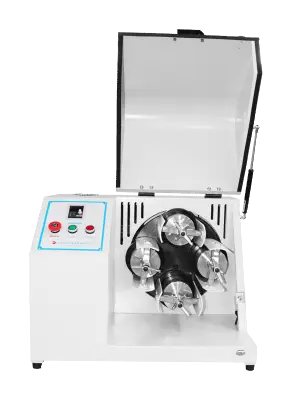
At its core, a lightweight vibrating ball mill is a compact, high-energy milling device designed to rapidly grind, mix, and homogenize a diverse range of materials at the laboratory scale. It is a specialized piece of equipment that researchers and technicians use to achieve ultrafine particle sizes, from microns down to nanometers, through the application of intense, three-dimensional vibrational energy. Unlike traditional rotary mills that rely on gravity and centrifugal force, this mill leverages high-frequency, low-amplitude vibration to create powerful impact, shear, and friction between the grinding media and the sample.
Its lightweight construction, typically with a mill base weighing under 20 kg and milling capacities ranging from 10 to 100 milliliters, makes it exceptionally portable and suitable for benchtop use. It operates with low noise and minimal vibration to the surrounding environment, a distinct advantage in quiet laboratory settings. This equipment is essential for sample preparation in materials science, geology, chemistry, pharmaceuticals, and nanotechnology, where precise particle size control is critical for subsequent analysis, such as X-ray diffraction (XRD), spectroscopy, and electron microscopy.
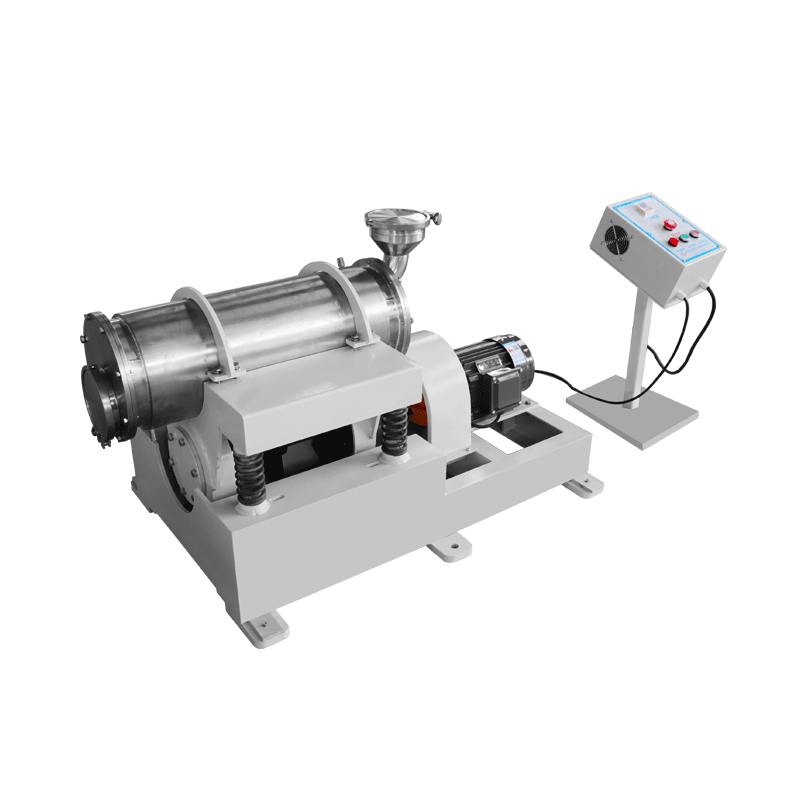
Core Function and Working Principle
The primary function of the lightweight vibrating ball mill is to transform coarse, granular materials into fine or ultra-fine powders. It accomplishes this through a unique operating principle: high-frequency three-dimensional vibration generated by a powerful electromagnetic drive or an eccentric motor. The milling vessel, typically a cylindrical jar made of stainless steel, agate, zirconia, or tungsten carbide, is filled with a specific amount of grinding media (e.g., balls or rods) and the material to be ground.
When the mill is activated, the entire vessel assembly oscillates rapidly (up to 3000 RPM in some models) along a complex, multi-axis path. This motion causes the grinding media to collide violently with each other and with the inner walls of the jar, creating a highly energetic environment. The key process parameters include vibration frequency and amplitude, which directly control the impact energy delivered to the particles, and the grinding time. The ratio of grinding media to material, as well as the media size, can also be adjusted to optimize the grinding outcome for specific material properties, such as hardness or brittleness.
Key Components and Design Features
While the product type is singular in its core principle, the lightweight vibrating ball mill includes several critical components that define its performance:
- Vibration Drive System: A high-speed electromagnetic vibrator or a compact motor with an eccentric weight produces the required high-frequency oscillations. This is the heart of the mill, directly influencing the energy input and grinding intensity.
- Milling Jar (Vessel): Available in various materials to prevent cross-contamination and suit different applications. Stainless steel is cost-effective and durable; agate and zirconia provide high purity and wear resistance for hard or abrasive samples; and tungsten carbide offers the highest hardness for the toughest materials. Jars typically have a volume of 10 mL, 25 mL, 50 mL, or 100 mL.
- Clamping and Safety Mechanism: A robust locking system (often quick-clamp) secures the jar in place during the violent oscillation, preventing accidents. Many models include a safety interlock that halts the machine if the lid is opened during operation.
- Base and Damping System: The mill body is mounted on a heavy, base equipped with vibration-dampening feet or springs to minimize transmission of vibration to the workbench and surrounding instruments.
- Control Panel: A digital display that allows the user to set and monitor key parameters such as vibration speed (frequency), grinding time, and sometimes a pause cycle to prevent overheating. Many models offer programmable memory functions to store common grinding protocols.
Key Performance Indicators and Selection Criteria
When selecting a lightweight vibrating ball mill for your laboratory, several key metrics should be carefully evaluated to ensure it meets your specific application needs:
- Processing Capacity: The total batch volume typically ranges from 10 mL to 100 mL. The effective grinding volume is usually around one-third of the jar's total volume to allow for efficient media movement.
- Final Particle Size: The finest achievable particle size is a critical specification. High-quality units can consistently produce sub-micron or nano-sized powders (often below 1 micron and as fine as 20 nm for some materials), depending on the material properties and process parameters.
- Vibration Frequency and Amplitude: Higher frequency and amplitude generally lead to faster grinding times but can also increase heat generation and wear. Select a model with adjustable parameters to adapt to different materials.
- Energy Efficiency and Speed: The mill's power consumption (typically 100-200 W) is low compared to larger equipment. The maximum oscillation speed (e.g., 1500-3000 RPM) is a direct indicator of its high-energy capability.
- Noise Level: A well-designed unit operates at a low noise level (e.g., less than 60 dB), which is crucial for a comfortable laboratory environment.
- Automation and Programmability: Look for models with digital timers and programmable speed settings. Advanced units may include data logging and multi-step program sequences.
- Ease of Maintenance: The jar and clamping system should be easy to clean and assemble. Quick-release clamps and simple designs reduce downtime between samples.
Application Fields and Selection Advice
The lightweight vibrating ball mill is an indispensable tool in a wide range of scientific and industrial fields. Its primary application is in research and development (R&D) laboratories, where it is used for:
- Materials Science: Mechanical alloying, solid-state reactions, and synthesis of nanomaterials (e.g., graphene, carbon nanotubes, metal oxide powders).
- Geology and Mining: Sample preparation for XRF, XRD, and ICP analysis, grinding rocks, ores, and minerals into uniform fine powders.
- Pharmaceuticals and Chemistry: Grinding active pharmaceutical ingredients (APIs), catalysts, and reagents for formulation development and quality control.
- Food and Agriculture: Sample homogenization for particle size analysis, nutrient extraction, and pesticide residue testing.
For beginners or general purpose use with standard materials (e.g., soft to medium-hardness minerals, ceramics, polymers), a lightweight model with a stainless steel or agate jar and adjustable vibration speed is recommended. For advanced users working with extremely hard materials (e.g., silicon carbide, tungsten carbide) or requiring the highest purity (e.g., for spectral analysis), a model with a zirconia or tungsten carbide jar and precise vibration control is more suitable. For high-throughput applications, consider a model that can accommodate multiple jars or a quick-change clamping system.
References
Lightweight vibrating ball mill: https://www.planetaryballmills.com/products/grinding-series/vibration-ball-mill/lightweight-vibrating-ball-mill.html
Lab vibration ball mill: https://www.planetaryballmills.com/products/grinding-series/vibration-ball-mill/lab-vibration-ball-mill.html
Related Products
Get In Touch
Our professional team will reply to you within one business day. Please feel free to contact us!