

What is a Horizontal Tube Furnace? A Professional Heating Equipment for High-Temperature Material Processing in Controlled Atmospheres
What is a Horizontal Tube Furnace?
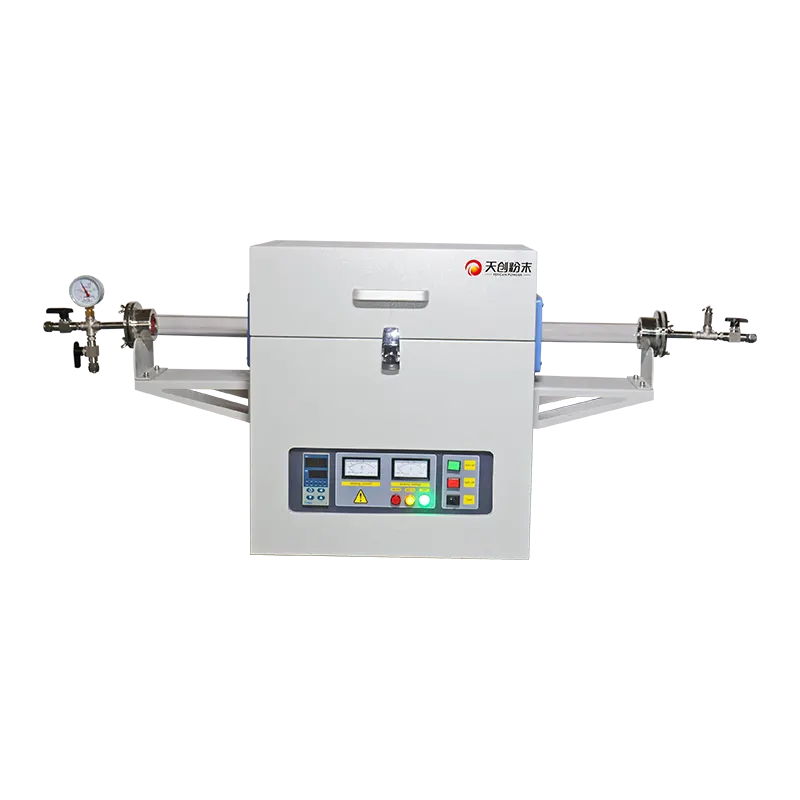
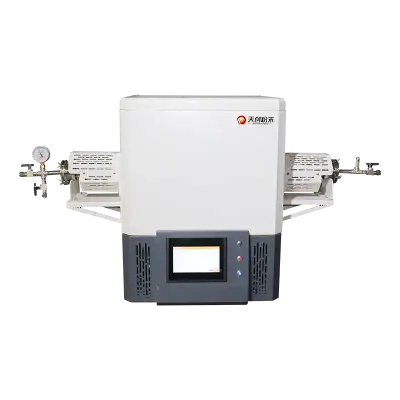
At its core, a horizontal tube furnace is a professional heating device used in material science, chemistry, metallurgy, and semiconductor industries to process materials at high temperatures under precisely controlled atmospheres or vacuum. It heats samples placed inside a horizontal cylindrical tube, enabling uniform thermal treatment for sintering, annealing, calcination, crystal growth, and chemical vapor deposition.
Core Function and Working Principle
The primary function of a horizontal tube furnace is to transform raw materials (powders, ceramics, metals, or semiconductors) into desired final products through controlled heating and cooling cycles. The furnace consists of a horizontal quartz or ceramic tube housed in a heating chamber. Heating elements (such as high-temperature alloy resistance wire or silicon-molybdenum rods) are arranged around the tube to provide uniform heat. The temperature is precisely regulated by a PID controller, achieving accuracy of ±1°C. The tube can be sealed with stainless steel flanges and connected to a vacuum pump or gas supply, allowing processes in inert, reducing, or reactive atmospheres.
Key process parameters include maximum temperature (typically 800°C to 1200°C, with some models up to 1700°C), heating rate (adjustable from 1°C/h to 40°C/min), soaking time, and cooling rate. These parameters directly affect the microstructure, phase composition, and final properties of the treated material.
Main Types and Classifications
Horizontal tube furnaces are generally categorized by temperature range and tube material:
Low-Temperature Models (≤1000°C)
These use quartz glass tubes and alloy heating elements, suitable for annealing, drying, and low-temperature sintering. They are cost-effective and ideal for general laboratory use.
Medium-High Temperature Models (1000°C–1400°C)
Employing ceramic tubes (e.g., alumina) and silicon carbide or molybdenum disilicide heating elements, these furnaces handle higher thermal loads and are used for ceramic sintering, metal heat treatment, and catalyst preparation.
High-Temperature Models (≥1600°C)
Equipped with high-purity alumina tubes and advanced heating elements (e.g., lanthanum chromite), these are designed for advanced materials like high-temperature superconductors, refractory metals, and composite ceramics.
Additionally, some models feature a single heating zone, while others have multiple zones for better temperature uniformity along the tube length.
Key Performance Indicators and Selection Criteria
When selecting a horizontal tube furnace, consider the following:
- Maximum Temperature and Temperature Uniformity: Ensure the furnace can reach the required process temperature and maintain uniformity (typically ±1°C to ±5°C) across the working zone.
- Heating Rate and Control: Look for programmable controllers with multiple ramp/soak segments (e.g., 8, 22, or 50 segments) to replicate complex thermal profiles.
- Atmosphere and Vacuum Capability: Check the sealing system (e.g., KF flanges with O-rings) and compatibility with inert gases (argon, nitrogen), hydrogen, or vacuum down to 10⁻³ Pa.
- Tube Material and Diameter: Quartz tubes are economical for low temperatures; alumina tubes are required for high temperatures. Choose the inner diameter (e.g., 60 mm, 80 mm, 120 mm) based on sample size.
- Safety Features: Over-temperature protection, gas flow monitoring, and pressure relief are essential for safe operation.
- Energy Efficiency and Cooling: Double-layer shell with forced air cooling keeps the exterior cool and reduces energy consumption.
Application Areas and Selection Advice
Horizontal tube furnaces are widely used in research laboratories, quality control, and small-scale production across industries such as materials science, ceramics, metallurgy, electronics, and chemistry. Typical applications include sintering of powder metallurgy parts, growth of single crystals, CVD coating, and heat treatment of advanced alloys.
For academic labs and R&D centers, a mid-range model (1200°C) with a programmable controller and quartz tube is often sufficient. For industrial quality control or production requiring higher temperatures and larger batches, consider a multi-zone furnace with an alumina tube and vacuum capability. Always verify the required atmosphere compatibility and temperature uniformity before purchasing.
References
For more details, visit the official product page: Horizontal Tube Furnace. Related products include Vacuum Tube Furnace and Rotary Tube Furnace.
Related Products
Get In Touch
Our professional team will reply to you within one business day. Please feel free to contact us!