

What is a Vacuum Drying Oven? A Low-Temperature Drying Equipment for Heat-Sensitive and Decomposable Materials
What is a Vacuum Drying Oven?
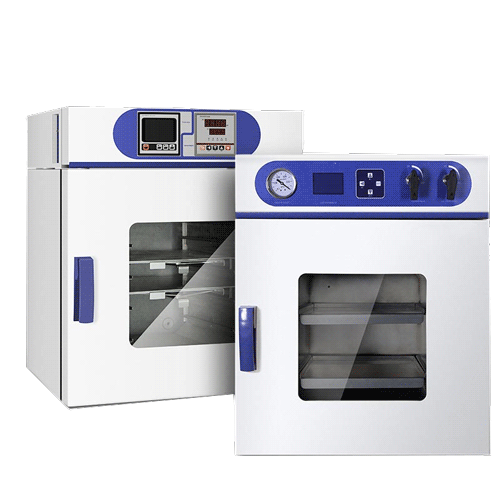
At its core, a vacuum drying oven is a professional drying device designed to remove moisture or organic solvents from materials under reduced pressure, ideal for heat-sensitive, easily oxidized, or decomposable substances. Laboratories and industries in pharmaceuticals, chemicals, food processing, and electronics use it to achieve gentle, efficient drying without compromising product quality.
Core Function and Working Principle
Unlike conventional air-circulation ovens that rely on hot air convection, a vacuum drying oven first evacuates the chamber to a low-pressure environment. By lowering the pressure, the boiling point of water or solvents decreases dramatically—for example, water boils at around 70 °C at -0.07 MPa instead of 100 °C at atmospheric pressure. This enables effective drying at temperatures well below the material's degradation threshold.
The oven's construction typically includes a stainless steel or carbon steel chamber surrounded by insulation, a vacuum pump, a heating system (electric heating, steam, hot water, or thermal oil circulation), and an intelligent temperature controller. The process works as follows: the operator places the material on trays or shelves inside the sealed chamber, the vacuum pump removes air to create a negative pressure (down to -0.1 MPa or 133 Pa absolute), the heating system raises the temperature to the set level, and the low boiling point causes rapid evaporation. The vapor is extracted by the vacuum pump or condensed in an optional solvent recovery system.
Key parameters affecting drying efficiency include the level of vacuum (pressure), temperature (typically from room temperature +10 °C up to 250 °C, but often 35–150 °C for heat-sensitive materials), and heating time. The absence of oxygen prevents oxidation, while the gentle heat preserves the material's physical and chemical properties.
Core Components and Key Technologies
A vacuum drying oven consists of several essential parts:
- Chamber and Shell: The inner chamber is made of corrosion-resistant stainless steel (304 or 316L) or carbon steel with an anti-rust coating. The outer shell is powder-coated steel with insulation filling between the layers for energy efficiency.
- Heating System: Can be electric heaters (mounted around the chamber or on heating plates), steam coils, hot water circulation, or thermal oil. Different heating methods suit different temperature ranges and safety requirements.
- Vacuum System: Includes a vacuum pump (oil-sealed rotary vane or dry pump), a vacuum gauge, and valves. Some models support inert gas purging via an inlet to protect sensitive materials further.
- Control System: Microprocessor-based PID controllers with digital displays provide precise temperature setting (resolution 0.1 °C) and timing (0–9999 minutes). Advanced models offer programmable multi-step temperature and vacuum profiles.
- Sealing and Observation: Silicone rubber gaskets ensure a tight seal. Tempered glass viewing windows allow monitoring without breaking the vacuum.
These components work together to create a controlled low-pressure, low-oxygen environment that accelerates drying while preserving product integrity.
Key Performance Indicators and Selection Criteria
When selecting a vacuum drying oven, consider the following performance metrics:
- Vacuum Level: Measured in Pa or mbar. A typical ultimate vacuum is below 133 Pa (1 Torr). Higher vacuum (lower pressure) enables lower boiling points and faster drying but may require more robust pumps and sealing.
- Temperature Range and Stability: Most units cover from room temperature +10 °C up to 200–250 °C. Temperature uniformity (e.g., ±1 °C) ensures consistent results across the chamber.
- Chamber Size and Shelf Configuration: Available from small benchtop units (e.g., 275×300×300 mm) to large industrial models with multiple shelves. The number and spacing of shelves determine the batch capacity.
- Heating and Cooling Rates: Faster heating ramps reduce cycle time. Some models offer forced cooling to speed up the process.
- Automation and Programmability: Digital controllers with programmable temperature/vacuum profiles allow reproducible drying protocols, critical for R&D and quality control.
- Solvent Recovery: For processes involving expensive or hazardous organic solvents, a condenser and collection system are essential to capture and reuse vapors.
- Ease of Maintenance: Features like easily replaceable door gaskets, washable chambers, and accessible vacuum pump filters reduce downtime.
For example, the TENCAN vacuum drying oven series offers models with options for electric or steam heating, up to 8 shelves, and inert gas inlets, making them suitable for GMP-compliant pharmaceutical drying and general laboratory use.
Application Fields and Selection Advice
Vacuum drying ovens are indispensable in multiple industries:
- Pharmaceuticals: Drying of active pharmaceutical ingredients (APIs), antibiotics, vitamins, and biological samples that degrade at high temperatures or oxidize in air.
- Chemical Industry: Drying of catalysts, dyes, pigments, and fine chemicals that are sensitive to moisture or oxygen.
- Food and Agriculture: Gentle drying of heat-labile nutrients, herbs, and extracts while preserving flavor and bioactive compounds.
- Electronics and Materials Science: Drying of lithium battery materials, electronic components, and specialty powders under inert atmosphere.
- Academia and Research: Sample preparation, glassware sterilization, and controlled drying experiments.
For labs with limited space and small batches, a benchtop vacuum oven (e.g., DZF-6020AB with a capacity of 27 liters) is a cost-effective choice. For larger production, floor-standing models with multiple shelves and solvent recovery are recommended. If the material requires even lower temperatures (below room temperature), consider a vacuum freeze-drying oven. For applications needing rapid, uniform heating, a microwave vacuum drying oven may be more appropriate.
References
Productos relacionados
Contáctenos
Nuestro equipo profesional le responderá en el plazo de un día laborable. ¡No dude en contactarnos!