

What is Stainless Steel Roll Mill Jar? A Durable Container for Contamination-Free Grinding in Roller Ball Mills
What is a Stainless Steel Roll Mill Jar?
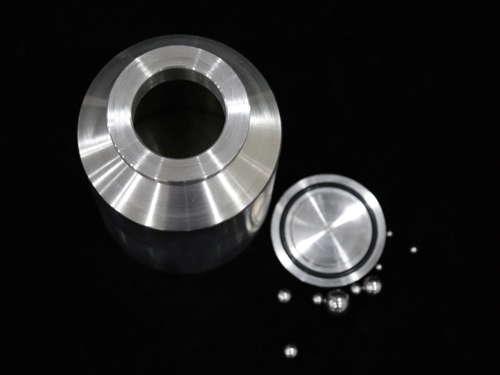
At its core, a stainless steel roll mill jar is a durable, cylindrical container specifically designed for use in roller ball mills. It is the vessel that holds the material to be ground along with grinding media (such as balls or cylinders). As the jar rotates on the mill's rollers, the internal tumbling action generates impact and friction, reducing the particle size of the sample. Made from high-purity SUS 304 stainless steel, these jars offer excellent corrosion resistance, high-temperature tolerance, and a smooth interior surface that minimizes contamination. They are widely adopted in laboratories and industrial settings for processing chemicals, pharmaceuticals, food ingredients, and advanced materials where purity and reliability are paramount.
Core Function and Working Principle
The primary function of a stainless steel roll mill jar is to facilitate the grinding or mixing of materials through rotational motion. The jar is loaded with the sample and appropriate grinding media (e.g., stainless steel or ceramic balls) and then placed on the rollers of a roller ball mill. When the mill operates, the jar rotates around its central axis, causing the grinding media to cascade and tumble inside. This action creates strong shearing and impact forces that break down the material into a fine powder.
The key advantage of a roll mill jar is its gentle but effective grinding action, which is ideal for materials that require low-energy or controlled grinding. The stainless steel construction ensures long service life even with abrasive substances, and the smooth interior finish reduces the risk of cross-contamination between batches. Additionally, many stainless steel roll mill jars come with secure lids or vacuum-sealing options, allowing users to perform grinding under inert gas or vacuum conditions, further preventing oxidation or moisture absorption.
Key Components and Technical Features
Stainless steel roll mill jars are not monolithic; they consist of several critical components that contribute to their performance:
- Body Material: High-purity SUS 304 stainless steel offers ~30% more corrosion resistance than standard steel grades, making it suitable for acidic, alkaline, and saline environments.
- Lid and Sealing Mechanism: Most jars feature a threaded lid with an O-ring or gasket to ensure an airtight seal. Some advanced models include vacuum ports for evacuation or gas purging.
- Capacity Options: Available in a range of volumes from 100 ml to several liters, allowing scalability from lab-scale experiments to small production runs.
- Surface Finish: The inner surface is polished to a mirror-like finish to reduce material adhesion and ease cleaning.
- Compatibility: Designed to fit standard roller ball mill models, including TENCAN's light-duty and heavy-duty roll ball mills.
Performance Indicators and Selection Criteria
When selecting a stainless steel roll mill jar, consider the following performance metrics:
Processing Capacity
The jar’s usable volume determines how much material can be ground per batch. Typical capacities range from 0.5L up to 10L. Smaller jars suit R&D and quality control; larger jars are used for pilot or small-scale production.
Grinding Efficiency
Efficiency depends on the jar’s rotational speed, the size and density of grinding media, and the material’s characteristics. Stainless steel jars with internal lifters (or ribs) can enhance tumbling action for faster grinding.
Contamination Control
High-purity SUS 304 stainless steel minimizes metal ion leaching. For ultra-sensitive applications, vacuum or inert gas sealing further prevents oxidation or contamination.
Durability and Maintenance
Stainless steel jars are robust and resistant to deformation under high-speed rotation. They are easy to clean with common solvents and can be autoclaved if needed. Regular inspection of the lid gasket ensures a consistent seal.
Automation Compatibility
Some modern roller ball mills offer programmable speed and timer functions. The jars are designed to be quickly fastened onto the rollers, enabling repeatable and automated grinding cycles.
Application Areas and Selection Advice
Stainless steel roll mill jars are versatile and find use across many industries:
- Pharmaceuticals: Grinding active ingredients, excipients, and herbal extracts without contamination.
- Chemical Industry: Mixing and grinding catalysts, pigments, and polymers under controlled atmosphere.
- Food Processing: Pulverizing spices, grains, and nutritional supplements.
- Materials Science: Preparing powders for ceramics, composites, and nanomaterials research.
For most laboratory applications, a standard stainless steel jar with a secure lid is sufficient. If your process requires an oxygen-free environment or involves volatile substances, opt for a vacuum or gas-purge model. Consider matching the jar capacity to your typical batch size to maximize efficiency. For abrasive materials, ensure the stainless steel grade (e.g., 304L or 316L) offers adequate wear resistance.
For more detailed product specifications and to browse compatible roller ball mills, visit the Stainless Steel Roll Mill Jar product page on the TENCAN website.
References
Produits associés
Contactez-nous
Notre équipe professionnelle vous répondra sous un jour ouvrable. N'hésitez pas à nous contacter !