

What Is Polyurethane Coated Iron Core Grinding Ball? A High-Density, Contamination-Free Grinding Media for Planetary Ball Mills
Overview
At its core, a polyurethane coated iron core grinding ball is a specialized grinding media used in planetary ball mills, stirred mills, and other high-energy milling equipment to pulverize and disperse materials into fine or ultra-fine powders. It combines a high-density iron core (density > 8 g/cm³) with a durable polyurethane outer layer, delivering the impact and shear forces needed for efficient grinding while completely preventing metal contamination of the processed material. Industries such as advanced ceramics, battery material production, pharmaceuticals, and pigment manufacturing rely on these balls achieve high purity and consistent particle size distribution.
Core Function and Working Principle
The primary function of a polyurethane coated iron core grinding ball is to convert coarse feed particles into a fine, homogeneous powder through repeated impact, compression, and friction inside a rotating mill chamber. During operation, the mill rotates, causing the grinding balls to tumble and collide with each other and with the mill wall. The high density of the iron core ensures that each ball carries substantial kinetic energy, even at moderate mill speeds, resulting in strong crushing forces. The polyurethane coating acts as a high-elasticity cushion that distributes the impact load over a larger area, reducing stress concentration and preventing brittle fracture of both the ball and the mill liner. Meanwhile, the exceptional elasticity of polyurethane (hardness ranging from Shore A10 to D75) allows the balls to deform slightly at the point of contact, creating intense shear zones that tear apart agglomerates and effectively delaminate layered materials.
Key process parameters that influence grinding efficiency include ball diameter, weight ratio of balls to powder, filling volume, and rotation speed. For example, using larger balls (typical diameters 15 mm, 25 mm, or 30 mm) favors coarse grinding, while smaller balls increase surface area and produce finer particles. Adjusting the polyurethane thickness (standard 3 mm coating) can fine-tune the balance between impact energy and gentle grinding action. The closed-cell structure of polyurethane also imparts excellent resistance to oils, solvents, and chemicals, making this media suitable for wet grinding with a wide range of liquid media.
Core Components and Key Technologies
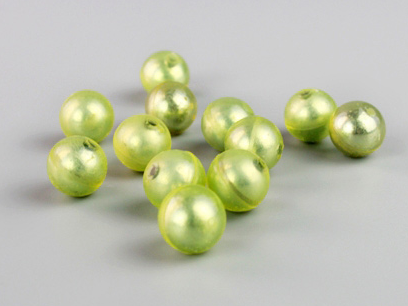
The ball consists of two meticulously engineered parts: a high-density metallic core and a polyurethane outer shell. The core is typically made of carbon steel or stainless steel, with a specific gravity exceeding 8 g/cm³. This high density endows the ball with excellent weight-to-volume ratio, maximizing the impact force per unit volume and boosting milling productivity. The polyurethane shell is bonded to the core through a specialized process to ensure no delamination under repeated mechanical stress. Polyurethane itself is a thermoset polymer with outstanding tensile strength, tear resistance, and a low coefficient of friction. Its hardness can be tailored from soft elastomers to semi-rigid grades. The 3 mm coating thickness provides a balanced combination of shock absorption and wear life. Compared to 304 stainless steel grinding balls, the polyurethane surface eliminates metal-to-metal contact and avoids introducing iron or chromium ions into sensitive products. This makes it the preferred choice for applications demanding extremely low contamination levels, such as lithium-ion battery cathode material processing or high-purity ceramic powder preparation.
Key Performance Indicators and Selection Guide
When evaluating polyurethane coated iron core grinding balls, several critical metrics should be considered:
- Density and Hardness: The iron core density of around 8.0–8.5 g/cm³ ensures effective energy transfer. The polyurethane surface hardness can range from Shore A10 to D75 depending on formulation. For harder, more abrasive materials, a higher hardness (e.g., Shore D60) is recommended to resist wear. For soft or sticky substances, a softer coating (Shore A60) offers better elasticity and reduces caking.
- Wear Resistance: Polyurethane exhibits 3–5 times better abrasion resistance than natural rubber, translating to longer service life and reduced media replacement costs. The coating normal wear rate is between 0.01 and 0.10 mm per 100 hours under typical milling conditions.
- Particle Size Control: These balls can produce final particle sizes down to the submicron range (e.g., 1–10 µm) when used in high-energy planetary ball mills. The combination of high density and elastic coating facilitates both deagglomeration and fine grinding in a single operation.
- Chemical and Temperature Resistance: Polyurethane demonstrates excellent resistance to oils, greases, alkalis, and many solvents. It also performs well under moderate temperatures (up to 80°C continuous, 120°C intermittent). For higher temperature or aggressive chemical environments, consider alternative media such as tungsten carbide mill balls.
- Automation Compatibility: These balls are compatible with automated feeding and classification systems used in modern production mills. Their consistent spherical shape and uniform size distribution (e.g., 15 mm, 25 mm, 30 mm) facilitate smooth handling.
Application Fields and Selection Advice
Polyurethane coated iron core grinding balls are widely applied in the following sectors:
- Advanced Ceramics: Milling of alumina, zirconia, silicon nitride, and other hard ceramics requiring high purity and narrow particle size distribution.
- Battery Materials: Preparation of cathode/anode active materials (e.g., LiCoO₂, LiFePO₄, graphite) where even trace metal contamination can degrade performance.
- Pharmaceuticals and Nutraceuticals: Fine grinding of active pharmaceutical ingredients (APIs) and herbal extracts that must remain free of metallic impurities.
- Pigments and Dyes: Dispersion and deagglomeration of organic and inorganic pigments to achieve high color strength and transparency.
- Magnetic Materials: Production of ferrite and rare‑earth magnet powders where contamination by ferrous particles would ruin magnetic properties.
References
- Product page: Polyurethane Coated Iron Core Grinding Ball
- Related: 304 Stainless Steel Grinding Ball
- Related: Zirconia Grinding Ball
- Related: Tungsten Carbide Mill Ball
Productos relacionados
Contáctenos
Nuestro equipo profesional le responderá en el plazo de un día laborable. ¡No dude en contactarnos!