

What is a Resin Ball Mill? A Specialized Grinding Mill for Soft and Sticky Resin Materials
What is a Resin Ball Mill?
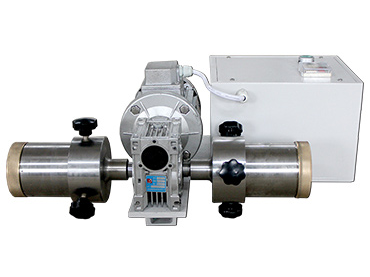
From the core, a resin ball mill is a specialized grinding mill designed for the fine grinding, dispersion and mixing of resin, polymer, and other soft, sticky or heat-sensitive materials. Unlike conventional ball mills that rely on heavy impact to crush hard minerals, a resin ball mill uses a gentler yet efficient grinding mechanism to break down resin particles without causing excessive heat buildup or agglomeration. It is widely used in laboratories and small-scale production for preparing resin-based coatings, adhesives, inks, and composite materials.
Core Function and Working Principle
The primary function of a resin ball mill is to transform coarse resin granules or lumps into a fine, uniform paste or powder form. The equipment consists of a rotating drum (or jar) partially filled with grinding media (usually ceramic, steel or zirconia balls) and the resin material. As the drum rotates, the media cascade and shear the resin particles through a combination of impact, compression and attrition forces.
However, because resin tends to be soft and sticky, standard ball mills often cause the material to stick to the walls or form agglomerates. A resin ball mill addresses this by employing optimized rotational speeds, specialized jar linings (e.g., nylon, polyurethane or PTFE), and sometimes wet grinding with solvents or liquid media to reduce adhesion and improve dispersion. The grinding process can be controlled by adjusting parameters such as rotation speed, grinding time, ball-to-material ratio, and the type of solvent added.
Key Components and Technology
A typical resin ball mill is built around a few critical components:
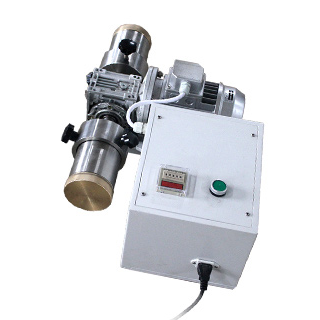
- Grinding Jar: Often lined with resin-friendly materials like nylon, polyurethane (PU) or PTFE to prevent contamination and reduce sticking.
- Grinding Media: Zirconia, ceramic or stainless steel balls of various diameters are used. The choice depends on the required fineness and the need to avoid metal contamination.
- Drive and Speed Control: Variable speed drives allow fine-tuning of the rotational speed to achieve optimal cascading action without overheating the resin.
- Sealing and Cooling: Some models offer sealed jars to contain volatile solvents, and optional water cooling jackets to dissipate heat generated during grinding.
Key Performance Indicators and Selection Criteria
When selecting a resin ball mill, consider the following performance indicators:
- Processing Capacity: Laboratory models typically handle 0.5–5 liters per batch, while larger units may go up to 20 liters. Choose based on your sample volume.
- Grinding Fineness: Resin ball mills can achieve particle sizes down to several microns or even submicron levels when used with wet grinding and appropriate media.
- Temperature Control: For heat-sensitive resins, a mill with a cooling jacket or intermittent operation is essential to prevent melting or degradation.
- Material Compatibility: Ensure the jar and media materials do not react with or contaminate the resin. For example, PTFE jars are ideal for highly corrosive resin formulations.
- Ease of Cleaning: Quick-release lids and smooth internal surfaces reduce downtime between batches.
Types of Resin Ball Mills
Resin ball mills come in several configurations:
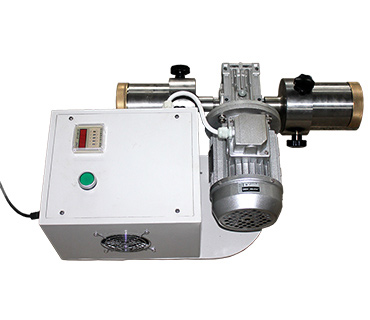
- Roller Jar Mill: A simple and common type where the jar is placed on rotating rollers. It is suitable for gentle mixing and grinding of resin pastes.
- Planetary Ball Mill: Offers high-energy grinding for faster results, but may generate more heat. Some models like the planetary ball mill can be used for resin if equipped with cooling features.
- Stirred Ball Mill (Attritor): Uses an agitator to stir the media, providing efficient grinding of viscous resin slurries.
- Vibration Ball Mill: Uses high-frequency vibration to grind, good for small batches of hard resin.
Application Areas and Selection Advice
Resin ball mills are primarily used in:
- Coatings and Paints: Grinding resin pigments and additives to achieve smooth, homogeneous finishes.
- Adhesives and Sealants: Dispersing resin fillers and hardeners for uniform consistency.
- Inks and Toners: Fine grinding of resin-based colorants for printing applications.
- Composites and Plastics: Mixing resin with fillers or nanomaterials for research and development.
For labs working with small batches of soft, sticky resins, a roller jar mill with a nylon or PTFE jar is often the best choice. For those requiring higher throughput or finer particle sizes, a stirred ball mill or a planetary ball mill with cooling might be more appropriate. Always consult with the manufacturer to ensure the mill is compatible with your specific resin formulation.
References
Sản phẩm liên quan
Liên hệ
Đội ngũ chuyên nghiệp của chúng tôi sẽ phản hồi trong vòng một ngày làm việc. Vui lòng liên hệ với chúng tôi bất cứ lúc nào!