

What is a Multi-Dimensional Mixer? A High-Efficiency Mixing Equipment for Achieving Uniform Blending of Powders and Granules
What is a Multi-Dimensional Mixer?
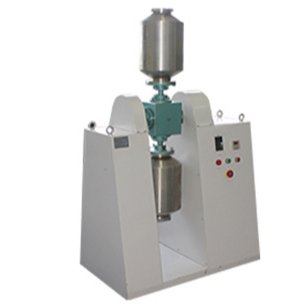
At its core, a multi-dimensional mixer (also known as a 3D mixer or multi-directional universal mixer) is a professional blending device that uses multi-axial motion to uniformly mix dry powders, granules, and even fragile particles. It is widely employed in pharmaceutical, chemical, food, electronic, metallurgical, and research laboratories where achieving a homogeneous blend without particle segregation or layer division is critical.
Core Function and Working Principle
The primary function of a multi-dimensional mixer is to transform a mixture of different particulate materials from an initial segregated state into a highly uniform final blend. Unlike conventional rotary mixers that spin in a single plane, the mixing barrel of this equipment is driven by a main shaft to perform complex movements in three dimensions — including translation, rotation, tumbling, and inversion. This results in a continuous series of convection, diffusion, and shear actions that thoroughly intermingle the materials. There is no centrifugal force that would cause specific gravity segregation, so even materials with different densities or particle sizes can be blended homogeneously.
Key process parameters include the barrel rotation speed (typically adjustable from 0 to 15 rpm) and the mixing time. The high filling rate — up to 90% of the barrel volume — allows for impressive batch efficiency, significantly outperforming conventional mixers that can only fill 40% of their volume. The closed mixing design also prevents dust leakage and external contamination, ensuring a clean work environment.
Core Components and Key Technology
The multi-dimensional mixer consists of a mixing barrel, a drive system (motor and gearbox), a main shaft, and a control panel. The barrel is made of high-quality stainless steel with a polished inner and outer surface, eliminating dead corners and facilitating easy cleaning and material discharge. The connecting parts use curved surfaces to avoid material accumulation. The drive system provides stable rotation while the control panel allows for speed adjustment and timer setting, enabling reproducible mixing cycles.
The most distinctive technical feature is the multi-directional motion mechanism. Unlike a simple V-type or double cone mixer that rotates around one axis, the multi-dimensional mixer’s barrel moves in a complex spatial trajectory, effectively eliminating blind spots and ensuring every particle experiences the same mixing action. This results in a blending uniformity that can reach 100% for many applications.
Key Performance Indicators and Selection Criteria
When choosing a multi-dimensional mixer, users should focus on the following specifications:
- Processing capacity: Available in models with barrel volumes from 100 L to 1000 L (e.g., HD100 to HD1000), corresponding to maximum load weights from 50 kg to 600 kg. Select based on your batch size.
- Mixing uniformity: The design ensures no dead zones and no stratification. For critical applications, homogeneity can be validated through sampling.
- Speed range: Typically 0–15 rpm, adjustable for different material characteristics. Lower speeds for fragile particles, higher speeds for faster blending.
- Material of construction: Stainless steel (304 or 316L) is standard, polished to a smooth finish for easy cleaning and corrosion resistance.
- Automation: Most models come with a timer and speed controller; advanced versions may include programmable logic controllers (PLC) for recipe-based operation.
- Maintenance: The simple mechanical design and accessible bearings make routine maintenance straightforward.
Application Areas and Selection Advice
Multi-dimensional mixers are used across a wide range of industries: pharmaceutical (for blending active ingredients with excipients), chemical (mixing catalysts, pigments, and additives), food (seasoning blends, powdered drinks), electronics (mixing ceramic powders), and metallurgy (powder alloy preparation). Research institutes and universities also rely on them for small-scale formulation development.
For laboratory or small-batch production, models like HD100 (100 L) or HD200 (200 L) are ideal. Mid-scale pilot projects can use HD400 or HD600, while large-scale manufacturing often requires HD800 or HD1000. If your materials are extremely heat-sensitive or require an inert atmosphere, consider a machine with a closed loop gas flushing option. Always ensure the mixer’s surface finish and material of construction comply with your industry’s hygiene and contamination standards (e.g., GMP for pharmaceuticals).
For related mixing technologies, you may also explore the V-type mixer or double cone mixer, which offer different motion patterns for specific applications.
References
Sản phẩm liên quan
Liên hệ
Đội ngũ chuyên nghiệp của chúng tôi sẽ phản hồi trong vòng một ngày làm việc. Vui lòng liên hệ với chúng tôi bất cứ lúc nào!