

What is a Vertical Tube Furnace? A High-Temperature Heating Device for Controlled Atmosphere Sintering and Thermal Processing
What is a Vertical Tube Furnace?
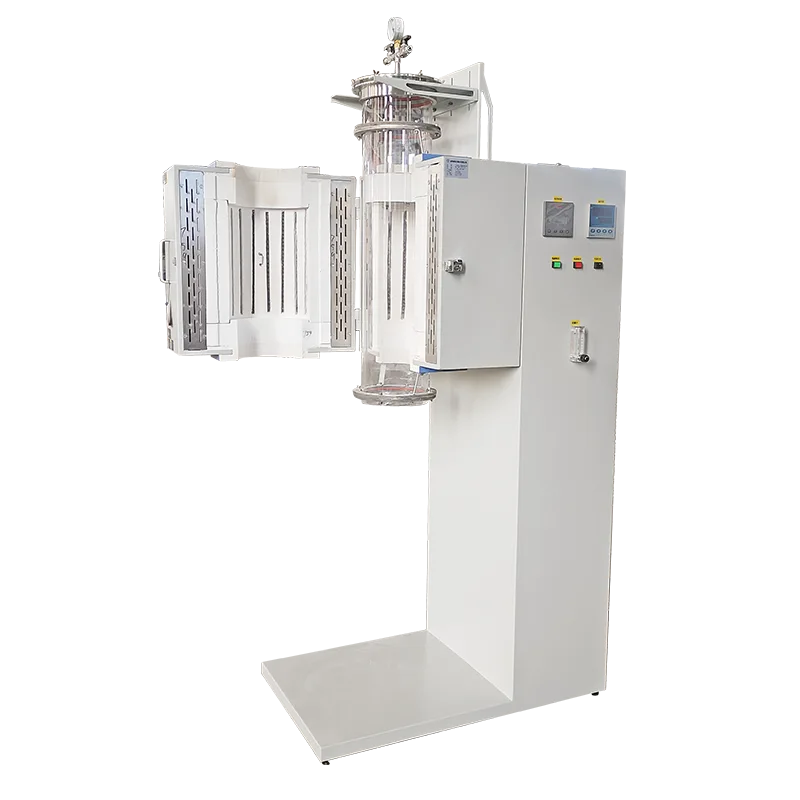
From its core, a vertical tube furnace is a specialized high-temperature heating device that materials scientists, chemists, and engineers use to perform precise thermal treatments such as sintering, annealing, calcination, and melting under controlled atmospheres. Unlike horizontal tube furnaces, the vertical orientation allows samples to be suspended or placed in a crucible within a vertically aligned quartz or ceramic tube, making it ideal for processes where gravity, gas flow dynamics, or uniform temperature distribution are critical.
Core Function and Working Principle
The basic function of a vertical tube furnace is to transform raw materials—such as powder compacts, ceramic green bodies, or metal samples—into densified, sintered, or heat-treated products through controlled exposure to high temperatures. The core working mechanism involves a vertically mounted cylindrical heating chamber (the tube) surrounded by resistance heating elements. The tube is typically made of high-purity quartz, alumina, or mullite, capable of withstanding extreme temperatures up to 1800°C or more.
The heating elements (often silicon carbide, molybdenum disilicide, or Kanthal wire) generate heat, which is transferred to the tube wall and then to the sample via radiation and convection. A programmable temperature controller precisely regulates the heating rate, soak time, and cooling rate. Meanwhile, gas inlets and outlets allow the introduction of inert gases (argon, nitrogen), reducing gases (hydrogen, forming gas), or reactive gases, or the connection to a vacuum pump to create a low-pressure environment. This combination of temperature and atmosphere control enables complex reaction pathways and material transformations.
Key Components and Technologies
Understanding the main parts of a vertical tube furnace helps in selecting the right model for specific applications:
- Furnace Tube: Usually made of quartz, alumina, or mullite. Quartz tubes are suitable up to 1200°C, while alumina tubes can reach 1700°C or higher. The tube diameter and length determine sample size capacity.
- Heating Elements: Placed around the tube, often in multiple zones to achieve uniform temperature. Common materials include Kanthal (up to 1200°C), silicon carbide (up to 1500°C), and molybdenum disilicide (up to 1800°C).
- Insulation: High-grade ceramic fiber or refractory bricks minimize heat loss and keep the outer shell cool.
- Temperature Control System: Digital PID controllers with programmable profiles (e.g., 30-segment programs) allow precise ramping, holding, and cooling. Many models offer touchscreen interfaces for easy programming.
- Gas and Vacuum System: Mass flow controllers (MFCs) for accurate gas mixing, needle valves, and vacuum gauges. A rotary vane or diaphragm pump can achieve vacuum levels down to 10⁻² Torr, while diffusion or turbo pumps enable high vacuum (10⁻⁵ Torr).
- Safety Features: Over-temperature protection, leak detection, automatic shutoff, and cooling water interlocks (if water-cooled).
Key Performance Indicators and Selection Criteria
When evaluating vertical tube furnaces, consider these critical parameters:
- Maximum Temperature & Working Temperature: Check both values. For example, a furnace rated at 1400°C may have a recommended working limit of 1300°C for long-term stability.
- Heating Zone Length & Uniformity: The length of the constant temperature zone (CTZ) determines how many samples can be processed simultaneously. Typical specifications: ±1°C uniformity over a 200–300 mm zone.
- Temperature Accuracy & Control: High-accuracy controllers achieve ±1°C or better. Look for PID auto-tuning and multi-segment programming.
- Heating and Cooling Rates: Maximum rate (e.g., 0–20°C/min) and recommended rate (often ≤10°C/min) to avoid thermal shock to the tube and sample.
- Tube Dimensions: Outer diameter (OD) and inner diameter (ID) define the sample space. Common ODs range from 40 mm to 100 mm.
- Vacuum & Atmosphere Capabilities: Ultimate vacuum level (e.g., 10⁻³ Torr) and gas flow range (e.g., 0–200 sccm). Ensure seals (O-rings or metal gaskets) are compatible with aggressive gases.
- Power Consumption: Lower power models (2–8 kW) are common for lab units; higher power for larger tubes or faster heating.
- Ease of Maintenance: Tube replacement should be straightforward. Some designs feature split shells for easy access.
Applications and Selection Advice
Vertical tube furnaces are indispensable in many fields:
- Materials Science & Nanotechnology: Synthesis of nanowires, graphene, carbon nanotubes via chemical vapor deposition (CVD).
- Ceramics & Refractories: Sintering of advanced ceramics (alumina, zirconia), solid-state reactions.
- Powder Metallurgy: Sintering of metal powders under reducing or inert atmospheres to avoid oxidation.
- Metallurgy & Heat Treatment: Annealing, quenching simulation, diffusion bonding.
- Catalyst Research: Activation, calcination, and reforming reactions.
For general laboratory research, a basic vertical tube furnace with a quartz tube (1200°C) and manual gas control suffices. For advanced materials processing requiring higher temperatures (up to 1800°C) or precise atmosphere control, choose a model with an alumina tube, multiple gas MFCs, and vacuum capability. Always consider the tube diameter and hot zone length matching your sample geometry. TENCAN offers a comprehensive range of vertical tube furnaces with various sizes and control options; refer to the Vertical Tube Furnace product page for detailed specifications. For related equipment, explore our Horizontal Tube Furnace or Vacuum Tube Furnace.
References
المنتجات ذات الصلة
تواصل معنا
سيرد فريقنا المتخصص عليك خلال يوم عمل واحد. لا تتردد في الاتصال بنا!